






DLC Coating on Metals and Plastics? A Complete Guide
Imagine boosting the lifespan of your parts by up to 10 times while slashing wear and friction—that’s the power of DLC coating. This diamond-like carbon layer is a game-changer in surface engineering, but applying it to metals versus plastics demands tailored approaches, especially in pre-treatment steps. Get it wrong, and you face adhesion failures or uneven finishes. This guide dives deep into DLC coating processes, key differences between substrates, and pro tips to optimize your operations.
1. DLC Coating Fundamentals: Why It’s the Go-To Surface Solution
DLC, or diamond-like carbon, has become a staple in industries from automotive to electronics because it combines hardness with low friction. But what makes it tick? Let’s break it down.
What is DLC Coating
DLC coating is a thin, amorphous carbon film that mimics diamond’s properties—extreme hardness (up to 9000 HV) and smoothness—without the cost. It’s applied via physical vapor deposition (PVD) or similar methods, creating a protective layer that’s just microns thick. This coating excels in reducing wear, resisting corrosion, and improving release in molds.
Key benefits include:
- Enhanced durability: Parts last longer under high-stress conditions, cutting downtime in production lines.
- Low friction: Ideal for moving components, like gears or bearings, where it can drop coefficients to 0.1 or less.
- Biocompatibility: Safe for medical tools, as it’s inert and non-toxic.
- Aesthetic appeal: Offers a sleek black finish, popular in luxury goods.
In practice, DLC coating variants range from hydrogenated (a-C:H) for flexibility to tetrahedral amorphous carbon (ta-C) for max hardness. Choosing the right type depends on your substrate and application—metals handle higher temps, while plastics need gentler processes to avoid melting. Manufacturers often ask, is vacuum coating worth the cost, and for DLC, the answer is a resounding yes given the massive boost in part longevity.
Overview of Key Deposition Methods (PVD vs. PACVD)
When it comes to depositing DLC coating, two main techniques stand out: PVD coating and plasma-assisted chemical vapor deposition (PACVD).
PVD coating involves evaporating carbon sources in a vacuum chamber, then ionizing them to bond with the substrate. It’s versatile for metals, offering strong adhesion through ion bombardment. Methods like cathodic arc or sputtering ensure uniform layers, but they run hot—up to 500°C—which suits metals but challenges plastics.
PACVD, on the other hand, uses gas precursors like acetylene in a plasma environment at lower temps (below 200°C). This makes it plastic-friendly, as it avoids thermal damage. It shines in creating hydrogen-rich films for better elasticity.
Comparing the two:
- PVD pros: High density, excellent for hard DLC films; cons: Higher energy might stress delicate parts.
- PACVD pros: Cooler process, uniform on complex shapes; cons: Slower deposition rates.
In vacuum coating equipment, hybrid systems blend these for optimal results. For instance, advanced magnetron sputtering setups can tweak parameters for either method, ensuring your coating process aligns with production goals like speed and cost.
2. DLC on Metals: In-Depth Process
Metals are prime candidates for DLC coating due to their robustness, but success hinges on precise steps. Here’s how it’s done, with insights from proven systems.
Metal Surface Preparation: The Critical First Step
Pre-treatment is make-or-break for DLC coating on metals. Contaminants or oxides can wreck adhesion, leading to peeling under load.
Start with cleaning: Ultrasonic baths remove oils, followed by plasma etching to activate the surface. For alloys like zinc, aluminum, copper, or iron die-casts, electroplating pre-treatment is key. This involves:
- Acid dipping to etch microstructures.
- Neutralizing to prevent residue.
- Applying a thin intermediate layer, like chromium or titanium, for better bonding.
Why emphasize this? Poor prep accounts for 70% of coating failures. In high-volume ops, automated lines in PVD machines integrate these steps, saving time.
Foxin’s systems excel here, with built-in chambers that handle multi-step prep seamlessly, drawing on their extensive patent portfolio to minimize defects.
How Foxin PVD Equipment is Optimized for Metals
Foxin’s high-performance PVD vacuum coating machine, including multi-arc ion plating and magnetron sputtering systems, is tailored for metals. These machines use high-vacuum environments (down to 10^-5 Pa) to deposit DLC films with precision.
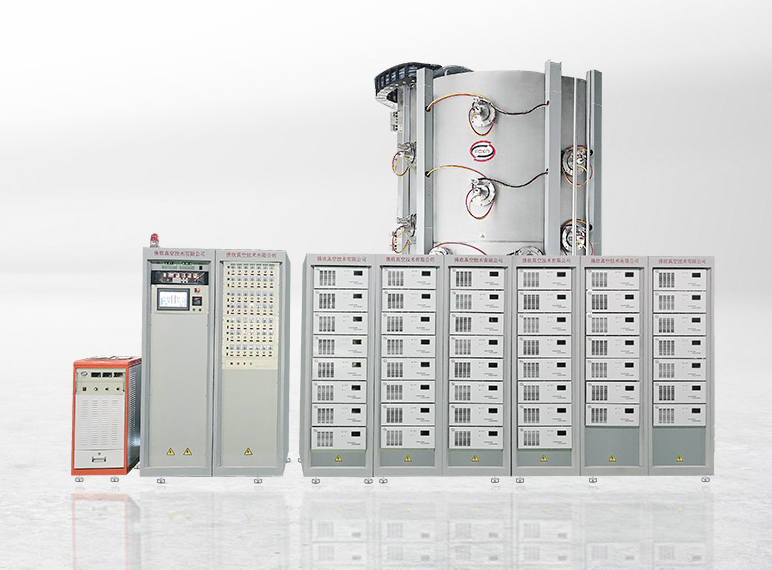
Key optimizations:
- Arc sources: Deliver dense plasma for thick, adherent layers on steel or titanium.
- Bias voltage control: Adjusts ion energy to penetrate metal lattices without damage.
- Batch processing: Handles large loads, ideal for automotive parts or tools.
For example, in coating die-cast iron, Foxin setups achieve uniform thin film deposition across irregular shapes, boosting hardness by 5x. Their consumables, like targets and gases, ensure consistent runs, reducing waste.
This expertise helps manufacturers scale, turning coating services into in-house strengths for cost savings.
Post-Coating Quality Verification & Performance
After deposition, verify quality to ensure DLC coating performs. Tests include:
- Adhesion (scratch or pull-off tests per ASTM standards).
- Thickness measurement via ellipsometry.
- Hardness via nanoindentation.
- Friction via tribometers.
Performance-wise, metal DLC coatings shine in harsh environments: Pistons see 30% less wear, tools last longer in machining. Real-world data shows ROI in months through reduced maintenance.
Foxin’s integrated diagnostics in their vacuum plating machines automate these checks, providing data logs for quality control.
3. DLC on Plastics: Overcoming Challenges with Innovative Processes
Plastics pose unique hurdles for DLC coating, like low thermal tolerance and poor conductivity. But with smart tweaks, it’s doable and rewarding.
Unique Challenges with Plastic Substrates
Plastics like ABS or PC deform above 100°C. Overcoming this requires low-temp methods. Interestingly, many wonder why PVD coating can be used in plastic products at all; it is thanks to advanced cooling systems and specific pulse frequencies that prevent the substrate from melting while still allowing for a hard DLC bond.
Pre-treatment Key: Conductive Layer & Base Protection
Prep plastics by building conductivity and protection. Electroless plating deposits a nickel or copper seed layer chemically, no electricity needed.
Then, spray a primer before evaporation plating to shield from heat and enhance grip. This duo prevents delamination.
For sensitive parts, UV-curable primers cure fast, fitting high-throughput lines.
Core Process Choice: Evaporation Plating vs. Magnetron Sputtering
Choose wisely: Evaporation plating heats carbon to vaporize, suiting primed plastics for quick, cost-effective layers.
Magnetron sputtering, however, bombards targets with ions for denser films. It can coat ABS or PC directly sans primer in some cases, thanks to room-temp ops and better control.
Pros of sputtering: Superior uniformity on curved plastics; cons: Slower than evaporation.
In PVD systems, hybrids allow switching, expanding applications like electronics casings.
Modified Coating Techniques for Expanded Applications
Innovations like PECVD (plasma-enhanced CVD) add hydrogen for flexible DLC films on plastics, ideal for flexible electronics.
Doping with silicon or nitrogen tweaks properties—e.g., Si-DLC for better hydrophobicity in optics.
These mods open doors to new markets, from consumer goods to med devices, where thin film coatings add value without bulk.
4. Metals vs. Plastics: Key Differences & Selection Guide
Understanding substrate differences guides your DLC coating strategy.
Process Adjustment Comparison
| Aspect | Metals | Plastics |
|---|---|---|
| Pre-treatment | Electroplating, plasma etch | Electroless plating, primer spray |
| Temperature | Up to 500°C | Below 200°C |
| Deposition Method | PVD (arc/sputtering) | PACVD or low-temp sputtering |
| Adhesion Challenges | Oxides, contaminants | Low conductivity, thermal sensitivity |
| Typical Thickness | 2-5 μm | 1-3 μm |
This table highlights tweaks needed for success.
Equipment Selection Recommendations
For metals, opt for robust multi-arc ion plating machines handling high loads.
Plastics need low-energy magnetron sputtering equipment with cooling.
Hybrid vacuum coating systems offer flexibility, cutting setup costs.
End-Performance & Cost-Benefit Analysis
Metals yield harder, longer-lasting DLC coatings for heavy-duty use, with ROI via extended part life.
Plastics focus on aesthetics and light protection, cheaper upfront but needing careful handling.
Overall, coating equipment investment pays off: 20-50% efficiency gains, per industry benchmarks.
5. Troubleshooting & Practical Tips for Optimal Results
Even pros hit snags—here’s how to fix them.
Poor Adhesion: Causes & Solutions
Causes: Dirty surfaces, wrong bias, mismatches.
Solutions:
- Double-check prep with surface energy tests.
- Adjust voltage in PVD machines.
- Use interlayers like TiN.
Color Inconsistency or Defects
Blame uneven plasma or gas flows.
Fix: Calibrate coating chambers, use rotation fixtures.
Tips for Production Efficiency Optimization
- Batch similar parts to minimize changeovers.
- Monitor vacuum levels for consistent thin film deposition.
- Train staff on equipment maintenance to avoid downtime.
These keep your line humming.
Conclusion:
Success in DLC coating boils down to prep, process, and equipment mastery. Get these right, and you unlock durability, efficiency, and market edge.
Foxin stands out with tailored solutions, customization, and global support, helping you navigate from metals to plastics.
Do you have a specific coating challenge? Consult with a Foxin engineer today for a free preliminary evaluation. Explore our case studies.