





News
35 Year Pvd Coating Machine In Foxin
PVD vs Spray Paint Machine: Process, Cost, and Longevity
Surface coatings transform industrial products. They boost durability, enhance aesthetics, and optimize performance. Consider automotive components, precision tools, or electronics. The right coating can significantly extend product life and reduce expenses.
This article compares two leading methods: Physical Vapor Deposition (PVD) and spray paint machine applications. We’ll explore their processes, costs, and durability to guide decision-makers like project managers, R&D engineers, and procurement directors.
What is PVD? It’s an advanced vacuum coating technology. It deposits thin films at the atomic level, offering exceptional durability and eco-friendly benefits. Spray paint machines, by contrast, use liquid or powder coatings for rapid application but may lack in long-term performance.
Process Comparison
The processes behind PVD and spray paint machines differ greatly. Let’s dive in.
What Is the PVD Process
Physical vapor deposition (PVD) operates in a vacuum chamber. Materials are vaporized and deposited onto surfaces through physical means.
Key techniques include:
- Sputtering: High-energy ions strike a target, ejecting atoms that form a thin film. Define sputter: the atomic-level ejection from a solid material.
- Evaporation: Heat converts material into vapor, which condenses on the substrate.
This results in precise thin film deposition. Examples include titanium nitride coating or DLC coatings, known for hardness and low friction. What is DLC? A durable, slick layer ideal for high-wear applications.
PVD avoids chemical reactions. It’s clean and highly controlled. Vacuum technology ensures minimal contamination.
Spray Paint Machine Process
Spray paint machines atomize coatings using compressed air or electrostatic charges.
The process involves:
- Surface preparation.
- Applying primer.
- Spraying liquid paint or powder with tools like a powder coating gun.
- Curing, often in a powder coating oven.
The spray painting process relies on adhesion, using solvents or powders like flocking powder. It operates under normal atmospheric pressure, making it fast and adaptable.
Comparing the Two
PVD and spray paint machines differ significantly:
- Environment: PVD requires a vacuum, eliminating VOC emissions. Spray methods produce waste and solvents.
- Precision: PVD coats complex shapes uniformly. Spray may cause drips or uneven layers.
- Materials: PVD excels with metals and ceramics like PVD gold or black chrome. Spray suits organic coatings.
A common misconception links sputtering to spraying.
Sputtering meaning: atomic transfer in a vacuum, not liquid dispersion.
PVD is a physical process, unlike chemical-based electroplating or spray methods.
Learn more about our sputtering equipment for advanced vacuum coating solutions.
| Aspect | PVD | Spray Paint Machine |
|---|---|---|
| Environment | Vacuum (no VOCs) | Atmospheric (emissions) |
| Material Transfer | Atomic (sputtered) | Bulk (liquid/powder) |
| Precision | High, uniform | Variable, potential defects |
| Materials | Metals, ceramics | Organic coatings |
PVD delivers unmatched precision and environmental benefits.
Cost Analysis
Initial Setup Costs
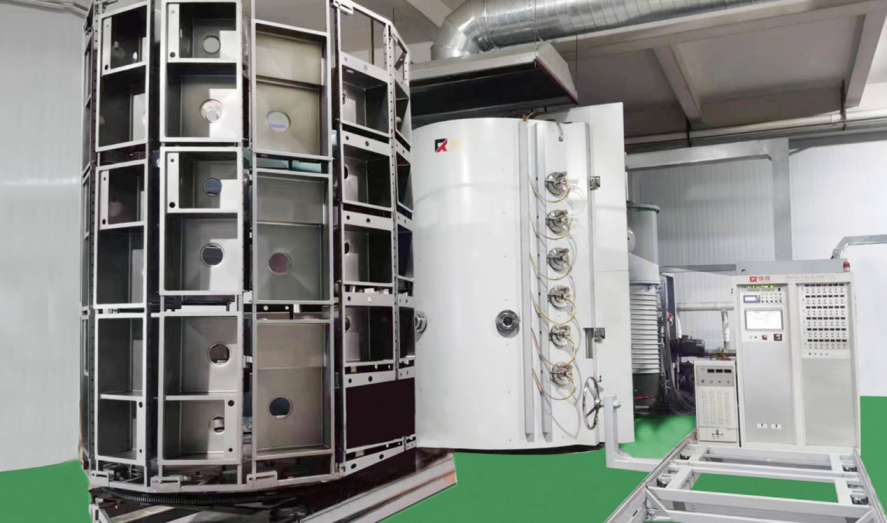
PVD systems, like Foxin’s vacuum plating machines, require advanced technology, such as magnetron sputtering setups and vacuum chambers.
Spray paint machines, including powder coating guns or roller chain systems, are generally more accessible for smaller operations.
For tailored pricing on PVD systems, contact our team.
Ongoing Operational Costs
Long-term costs reveal deeper insights:
- Materials: PVD maximizes target utilization, reducing waste. Spray methods lose up to 50% through overspray.
- Energy: PVD’s vacuum processes are energy-efficient. Spray requires high-energy curing ovens.
- Labor and Maintenance: PVD systems are automated, minimizing labor. Spray setups need frequent cleaning of nozzles and electrode holders.
Waste management adds costs for spray methods due to VOC regulations. PVD’s cleaner process avoids such issues.
Total Cost of Ownership (TCO)
Over time, PVD proves cost-effective:
- High-volume production: PVD reduces rework by 30-50%.
- Example: Tools with TiN coating last longer, cutting replacement costs.
- Powder coating machines offer some savings but lack PVD’s precision.
PVD lowers per-unit costs in industrial coating solutions. For custom cost evaluations, reach out via our inquiry form.
| Cost Factor | PVD Advantage | Spray Paint Machine Drawback |
|---|---|---|
| Material Efficiency | High (low waste) | High waste (overspray) |
| Maintenance | Minimal | Frequent |
| Long-term Savings | Significant ROI | Higher ongoing costs |
Longevity and Durability
Durability drives value. PVD outperforms spray methods here.
PVD Coating Strengths
PVD coatings, like titanium nitride or DLC, achieve hardness of 2000-3000 HV (Vickers). Key traits:
- High wear resistance: Ideal for tools and components.
- Corrosion protection: Effective in harsh environments.
- Color stability: PVD finishes, like goldtone or black chrome, resist fading.
What is PVD coating? Thin, robust films with strong adhesion, enduring up to 500°C.
Spray Paint Limitations
Spray coatings, including powder paint, range from 100-500 HV. Common issues:
- Prone to scratches and chips.
- Peeling under stress.
- Fading from UV or chemical exposure.
Coating longevity: PVD layers last 3-5 times longer than spray coatings.
Real-World Applications
- Tools: PVD-coated drills endure longer, reducing downtime.
- Automotive: PVD resists road salts and impacts better than spray.
- Decorative: PVD plating on hardware maintains vibrancy.
PVD significantly extends product lifespans. See our case studies for performance data.
| Durability Metric | PVD | Spray Paint Machine |
|---|---|---|
| Hardness (HV) | 2000-3000 | 100-500 |
| Corrosion Resistance | Superior (thin barriers) | Basic (thicker layers) |
| Lifespan | 3-5x longer | Standard |
Conclusion
PVD surpasses spray paint machine methods across three dimensions:
- Process: Precise and eco-friendly.
- Cost: Lower TCO for high-volume production.
- Longevity: Unmatched durability for lasting value.
Choosing PVD enhances product quality and brand reputation. It’s a strategic investment for competitive markets.
Foxin is a trusted leader in PVD solutions in China. We specialize in vacuum plating machines, sputtering equipment, and magnetron systems. Discover our PVD coating machines to learn more, visit Foxin website or contact us for tailored vacuum coating technology solutions.