






PVD Coated Jewelry vs Gold Plated: Which Lasts Longer?
Let’s be honest: many of us have been there. You pick out a beautiful necklace or ring, only to find its shine fading within months, or worse, the surface starts peeling. Even more embarrassing is when the metal oxidizes and leaves that awkward green mark on your skin, or triggers red, itchy allergic reactions. This is all too common in the traditional jewelry market. It ruins the mood and ends up being a waste of resources.
Thanks to advancements in material science and shifting consumer values, pvd coated jewelry has become the new favorite, often compared against traditional Gold Plated Jewelry.
Which process is actually more durable? Is the higher price tag worth it? With so many “tarnish-free” promises out there, it’s hard to tell fact from fiction. To avoid these headaches, you need to understand the core technology. Many people search what is pvd coating when they’re actually looking for a longer-lasting solution. Let’s dive into the microscopic level, starting with the basic manufacturing principles, to uncover the truth behind these two surface treatment technologies and help you find the perfect piece that’s both beautiful and enduring. This is exactly what many people want to know when searching pvd jewelry vs gold plated.
Technical Principles: The Microscopic Difference
To understand the durability gap, we must look at the microscopic level to see how each process attaches color to the metal base. It’s not just about a surface layer; it’s a battle of molecular bonding structures.
1.1 Traditional Gold Plating (Electroplating)
Traditional gold plating, also known as electroplating, is a surface treatment technology based on electrochemical principles, with a history spanning over a century.
- Process: The base metal (usually brass, copper, or zinc alloy) is immersed in an electrolyte solution containing gold ions or other metal ions. Electricity is applied, causing the metal ions to reduce and deposit onto the base surface via electrolysis.
- Bonding: It relies primarily on chemical bonding. This bond is relatively weak, similar to “glue” or “paint spray,” where the coating floats on top of the base.
- Thickness: Due to cost and process limitations, the gold layer on typical fashion jewelry is usually between 0.05 to 0.5 microns. Such a thin layered structure means that once a micro-scratch appears, the base metal is easily exposed.
- Base Characteristics: Traditional plating often uses brass as the base. While easy to process and cheap, brass contains high levels of copper and zinc, which are susceptible to corrosion from acids in sweat, leading to blistering or peeling.
- Environmental Impact: The electroplating process involves significant chemical wastewater discharge, which can be burdensome to the environment if not handled properly.
1.2 PVD Coating Process (Physical Vapor Deposition)
PVD, or Physical Vapor Deposition, is an advanced surface treatment technology performed in a high-vacuum environment, originating from the aerospace industry. When we talk about pvd coating, this is the high-tech process we mean.
- Process: Inside a vacuum coating chamber, the pressure is pumped down to an extremely low state. An electric arc bombards solid metal targets (such as titanium, zirconium, chromium), vaporizing them into an ionic state. Then, under the influence of an electric field, these metal ions bombard and penetrate the base surface at high speed, forming a dense film.
- Bonding: This is a molecular-level penetration bond. Metal ions not only attach to the surface but also embed into the base lattice, forming a “metallurgical bond” that is extremely strong and difficult to peel. This is the core advantage of pvd plating over traditional electroplating.
- Coating Characteristics: The PVD film has extremely high density and a pore-free structure, significantly increasing hardness and chemical stability.
- Base Characteristics: The PVD process is typically paired with pvd stainless steel (316L medical-grade stainless steel). This material itself has excellent corrosion resistance, forming a double protective barrier when combined with the PVD film.
- Environmental Impact: The PVD process is dry, producing no wastewater, aligning with modern sustainable concepts.
Durability Showdown: Let the Data Speak
Theory alone isn’t enough to convince consumers. We need to quantify the durability differences with specific physical test data. Here is an analysis based on industry standard tests, which is also the key basis for answering how long does pvd jewelry last.
2.1 Surface Hardness and Abrasion Resistance
Hardness is the key indicator determining a piece of jewelry’s scratch resistance, usually measured by Vickers Hardness (HV).
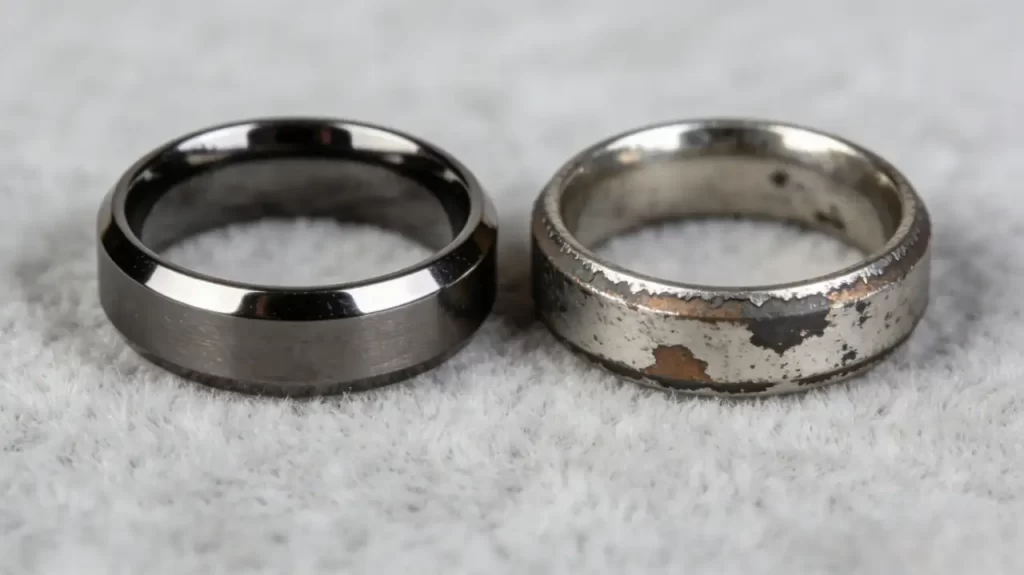
- Traditional Gold Plating: Surface hardness is about 100-200 HV. This means keys, zippers, coins, or even hard clothing fibers in daily life can leave scratches on the surface. Once the plating is damaged and the base metal is exposed, oxidation speeds up.
- PVD Coating: Surface hardness can reach 800-2000 HV, depending on the target material composition (e.g., Titanium Nitride TiN has extremely high hardness). Its wear resistance is 5 to 10 times that of traditional gold plating.
- Test Conclusion: In simulated daily wear tests on a friction testing machine (using standard abrasion wheels), traditional gold plating samples showed significant wear and base exposure after 500 cycles, while pvd coated jewelry samples maintained complete shine after 5000 cycles with no obvious scratches. This means the phenomenon of pvd jewelry tarnish is significantly delayed.
2.2 Corrosion Resistance and Waterproof Performance (Salt Spray Test)
Chemicals in sweat, seawater, and body wash are the main killers of jewelry color. The industry standard is the Neutral Salt Spray Test (NSS), used to simulate harsh corrosive environments.
- Traditional Gold Plating: In a 5% sodium chloride solution, it usually lasts only 24-48 hours before oxidation spots appear. This means if the wearer swims, showers, or sweats heavily, the jewelry is easily damaged, and its lifespan is greatly shortened.
- PVD Coating: High-quality PVD stainless steel jewelry can withstand 100-200 hours or more of salt spray testing without significant changes. Some high-end processes can even reach over 500 hours.
- Real-Life Application: PVD jewelry is defined as waterproof pvd jewelry. Wearers do not need to remove it when showering, swimming, or working out, whereas traditional gold plated jewelry is strictly advised to be removed upon contact with water, otherwise the plating life will be halved.
2.3 Color Retention Lifecycle
- Traditional Gold Plating: Under normal daily wear (not 24/7), the color retention period is typically 6 months to 1 year. Afterwards, local fading occurs and cannot be repaired; it must be re-plated or discarded.
- PVD Coating: With normal care, the color retention period for pvd coated jewelry can reach 2 to 5 years or even longer. Even if the color fades after many years, it usually fades evenly overall rather than peeling patchily, offering a better visual effect without the “patchy face” phenomenon. This is also why many people care about pvd jewelry care; proper maintenance can extend the lifespan even further.
Safety and Wear Experience: A Blessing for Sensitive Skin
Besides durability, the safety of direct contact between jewelry and the human body is equally important, especially for those with sensitive skin.
3.1 Nickel Release and Allergic Reactions
Nickel is the most common allergen causing metal contact dermatitis. The EU standard (REACH) stipulates that weekly nickel release must not exceed 0.5μg/cm².
- Traditional Gold Plating Risk: Because the plating is thin and porous, sweat easily penetrates the layer to corrode the brass base, causing nickel ions to leach out. For sensitive skin groups, wearing it for a short time may cause redness, itching, rash, and other contact dermatitis symptoms.
- PVD Coating Advantage: The 316L stainless steel base itself contains no nickel or contains trace amounts locked in the lattice. Plus, the dense sealing of the PVD film effectively blocks metal ions from contacting the skin. Therefore, pvd jewelry is often marked as hypoallergenic pvd jewelry or Nickel-Free products, suitable for long-term skin contact. This safety standard is in line with pvd coatings for medical device.
3.2 The Green Skin Problem
Many people find their skin turns green after wearing jewelry. This isn’t poisoning; it’s the result of copper oxidation.
- Cause: Traditional gold plating bases are mostly copper alloys. The copper salts produced after oxidation stain the skin, especially when sweating heavily, accelerating the chemical reaction.
- Solution: pvd coated jewelry uses a stainless steel base that is chemically stable and not easily oxidized, fundamentally eliminating the “green skin” phenomenon. No matter how much you sweat in summer, your neck and wrists stay clean.
3.3 Texture and Weight
- Color: Traditional gold plating uses real gold solution, so the color is warm and closer to 24K gold. PVD uses gas coloring, so the color is more modern, achieving rose gold, gunmetal, champagne gold, blue, and other popular colors. For example, 18k gold pvd craftsmanship can present a texture very close to 18K real gold, with higher color uniformity and no color difference. pvd black is also a very popular choice in recent years because it doesn’t look old easily and has a unique style.
- Weight: 316L stainless steel density is slightly higher than brass, making pvd coated stainless steel jewelry feel more substantial when worn and less likely to look cheap. However, designers usually ensure wearing comfort through hollow craftsmanship or lightweight design to avoid excessive pulling on earlobes or the neck.
Cost-Performance Analysis: Initial Price vs. Cost Per Wear
Consumers often mistakenly think PVD jewelry is too expensive, but it needs to be considered from a long-term value perspective. Consumption shouldn’t just look at the price tag, but at the value. This is also the key to distinguishing the value of pvd gold jewelry versus traditional gold plated jewelry.
4.1 Initial Price Comparison
Since PVD coating requires expensive vacuum equipment, higher energy consumption, longer processing cycles, and more expensive base materials, its production cost is far higher than traditional electroplating. Therefore, for the same style of jewelry on the market, the price of the PVD version is usually 20%-50% higher than the traditional gold plated version. This makes some budget-conscious consumers hesitate, but the long-term value of pvd plated jewelry is often underestimated.
4.2 Cost Per Wear (CPW)
We can calculate the real cost with a simple formula: Cost Per Wear = Purchase Price ÷ Total Number of Wears.
- Case Assumption:
- Traditional Gold Plated Necklace: Price $30, Lifespan half a year (about 50 wears), Cost per wear $0.60. Frequent replacement is needed during this period, accumulating high costs.
- PVD Coated Necklace: Price $45, Lifespan three years (about 300 wears), Cost per wear $0.15.
- Conclusion: Although the initial investment for pvd coated jewelry is higher, due to its super long lifespan and maintenance-free characteristics, it is more cost-effective in the long run. For modern groups pursuing a “less but better” sustainable consumption concept, PVD is a more economical choice, also reducing the burden of waste jewelry on the environment. If you are looking for best pvd jewelry, cost-performance is an important consideration dimension.
How to Identify Real PVD Jewelry?
There is false advertising in the market; some merchants label ordinary electroplating as PVD to increase the price. Consumers can preliminarily identify through the following methods to ensure they buy real pvd coating jewelry:
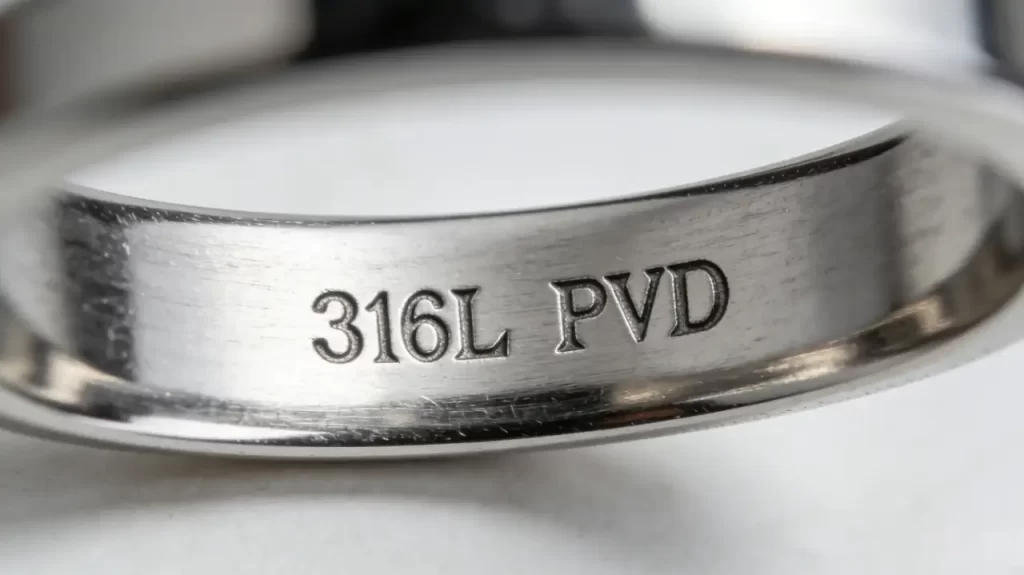
- Check Steel Stamps: Genuine pvd coated jewelry usually has
316L,Stainless Steel, orPVDstamped on the clasp, inside the ring, or on the back of the pendant. If it only saysGold Platedwithout material description, it’s mostly traditional gold plating. - Price Warning: The cost of real PVD craftsmanship is high. If a piece of jewelry is sold at a very low price (e.g., under $10) but claims to be permanently tarnish-free and waterproof/sweatproof, be cautious; it’s likely ordinary electroplating with protective oil.
- Magnet Test (Auxiliary): 316L stainless steel usually shows weak or no magnetism, while some cheap alloys may have stronger magnetism. However, this is not an absolute standard and needs to be combined with other characteristics.
- Merchant Transparency: Professional brands will clearly label process details, base materials, and maintenance suggestions, rather than vaguely using terms like “Gold Tone” or “Alloy Gold Plated”. Check if the product details page mentions technical terms like “Vacuum Coating” or “Ion Plating”. For the question what is pvd jewelry, official explanation is the most direct answer.
Care Guide: How to Extend Jewelry Life?
Even though pvd coated jewelry is durable, correct care can still significantly extend its shine period. Any jewelry needs care to accompany you for a long time. Doing pvd jewelry care well can keep your jewelry looking like new.
6.1 General Care Rules
- Chemical Isolation: Perfumes, hairsprays, and lotions contain alcohol and chemical components. It is recommended to wear jewelry after applying makeup and spraying perfume to avoid direct contact with the coating and prevent chemical corrosion.
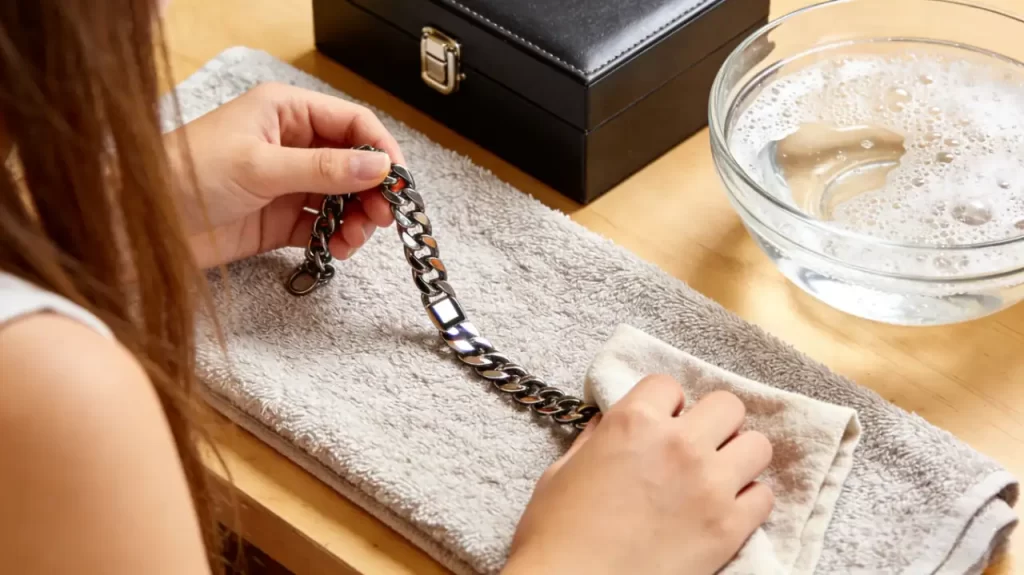
- Gentle Cleaning: Use a soft microfiber cloth to wipe. Avoid cleaners containing abrasive particles, toothpaste, or hard brushes to avoid scratching the surface.
- Regular Cleaning: If exposed to sweat or seawater, it is recommended to wash with mild soapy water and dry to remove residual salt.
6.2 Specific Scenario Suggestions
- Swimming and Fitness: Although waterproof pvd jewelry is waterproof, chlorine in pools and salt in seawater are highly corrosive. It is recommended to rinse the jewelry with clean water and dry it after exercise or swimming to remove residual chemicals.
- Storage Habits: When not wearing, jewelry should be placed separately in a sealed bag or jewelry box to avoid scratches from friction with other hard objects. Air circulation can also accelerate oxidation, so sealed storage is key. Avoid storing multiple necklaces tangled together.
Common Myths Busted (Myth Busting)
- Myth 1: “PVD is just a type of gold plating, no difference.”
- Truth: The physical principles are completely different. Electroplating is chemical deposition, PVD is physical vapor deposition. PVD’s bonding force and hardness far exceed electroplating; they belong to different generations of technology. In the comparison of pvd jewelry vs gold plated, PVD shows stronger durability.
- Myth 2: “PVD jewelry never fades.”
- Truth: No coating is permanent. PVD just significantly extends the fading time. As wear occurs over several years, the color will eventually fade, but the process is very slow and won’t be patchy. This is also why users often ask does pvd coating wear off; the answer is yes, but very slowly.
- Myth 3: “Only gold color has PVD.”
- Truth: PVD technology can achieve various colors by adjusting gas components, including black, blue, purple, and even rainbow colors, and the stability of these colors is also superior to traditional dyeing processes. Black PVD is particularly popular because it doesn’t look old easily. pvd gold plated jewelry is just one of the popular options.
Conclusion and Buying Advice
In summary, PVD Coated Jewelry is significantly superior to Traditional Gold Plated Jewelry in durability, waterproofness, biosafety, and long-term cost-performance. It represents the future direction of fashion jewelry craftsmanship, balancing aesthetics and practicality.
- Choose Traditional Gold Plating If: You only need jewelry for occasional occasion matching (such as dinners, photoshoots), pursue extreme real gold color texture, have a limited budget, and are willing to accept regular replacement.
- Choose PVD Coating If: You hope to buy jewelry for daily high-frequency wear, have sensitive skin, frequently contact water or exercise, pursue worry-free maintenance, and value long-term investment value.
At the end of the day, jewelry is ultimately worn for yourself. Compared to chasing fleeting trends, a piece that can stand the test of time and doesn’t need careful handling is often more worth buying. Nowadays, everyone favors PVD craftsmanship simply to have less fading embarrassment and more wearing freedom. When buying, ask more about the craftsmanship base and look less at the price tag. Choosing PVD is actually choosing peace of mind and freedom. Hope this comparison helps you avoid pitfalls and pick that good piece of jewelry you are truly willing to wear every day, all the time, making it the most worry-free highlight in your daily outfit. Among many pvd products, choosing a reputable merchant and clear process labeling is the key to ensuring you buy high-quality pvd jewelry.