






PVD Material Selection: What You Need to Know
Selecting the right material for your Physical Vapor Deposition (PVD) coating can be challenging, as your product’s success often depends on its surface finish. This guide simplifies PVD material selection, covering the basics of PVD materials and processes, as well as key factors for your application. By understanding how various materials produce durable thin films, you can make informed choices to improve your product’s performance and value.
Understanding PVD Material Selection in Thin Film Deposition
Before you can choose the right PVD materials, it’s important to grasp the fundamentals of the technology. The selection process is more than just picking a metal; it involves understanding how the material behaves during the deposition process and how it will perform on the final product.
The journey from a solid block of material to a high-performance thin film involves transforming it into a vapor phase and then condensing it onto a substrate. Let’s explore what PVD materials are, the different processes used to deposit them, and how they compare to other coating methods.
What Is PVD Material and Its Role in Physical Vapor Deposition?
A PVD material, known as a “target” or “source material,” is the solid substance vaporized to form a coating—like ink in a PVD printer. In physical vapor deposition, this material is turned into vapor by heating or ion bombardment.
The vapor travels through a vacuum chamber and condenses onto your product’s surface, creating a thin, uniform film. The choice of target material determines the coating’s color, hardness, and resistance to wear and corrosion.
PVD material is the foundation of the coating. Its purity, composition, and form are tightly controlled for consistent quality. Whether you need durability for a tool or a gold finish for a watch, selecting the right PVD material is essential.
Overview of PVD Coating Processes: From RF Sputtering to Multi-Arc Ion Plating
Several PVD processes exist to turn solid materials into functional coatings, each with unique advantages. The choice of process often depends on the material you are using and the desired properties of the thin film. Inside a vacuum chamber, different techniques are used to vaporize the source material.
Some of the most common PVD processes include:
- Sputter Deposition: This method involves bombarding the target material with energetic ions, which knock atoms off its surface. These “sputtered” atoms then deposit onto the substrate. Sputtering, including RF sputtering, offers excellent control over film thickness and composition.
- Thermal Evaporation: As one of the simpler PVD methods, this process heats the source material in a high vacuum until it evaporates. The vapor then travels and condenses on the cooler substrate.
- Electron Beam Evaporation: This technique uses a focused beam of electrons to heat and vaporize materials, especially those with high melting points. It produces exceptionally pure coatings.
Other advanced methods like cathodic arc evaporation and pulsed laser deposition are also used for specific applications, such as creating extremely hard coatings for tools. The preparation for all these processes starts with placing the target material and substrate into the vacuum chamber and creating the right environment for deposition.
Comparing PVD Materials with Alternatives: CVD, Electroplating, and More
PVD is a powerful coating technology, but it’s not the only option available. Understanding how it stacks up against other deposition techniques like Chemical Vapor Deposition (CVD) and electroplating can help you decide if it’s the right choice for your needs. Each method has its own strengths and is suited for different applications.
PVD offers significant benefits, especially in its versatility and environmental friendliness. Unlike electroplating, which involves wet chemical baths, PVD is a dry process conducted in a controlled environment. This eliminates the use of hazardous chemicals and reduces waste. Compared to CVD, which often requires very high temperatures, many PVD processes can operate at lower temperatures, making them suitable for a wider range of substrate materials.
Here’s a quick comparison of these key deposition techniques:
| Feature | Physical Vapor Deposition (PVD) | Chemical Vapor Deposition (CVD) | Electroplating |
|---|---|---|---|
| Process | Physical process in a vacuum | Chemical reaction at high temperatures | Electrochemical deposition in a liquid bath |
| Materials | Metals, alloys, ceramics | Mostly non-metals like silicon, carbon | Conductive metals |
| Temperature | Low to moderate | High | Low |
| Environment | Clean, no harmful chemicals | Can use precursor gases | Involves chemical solutions and waste |
Common Materials Used in PVD Coating Applications
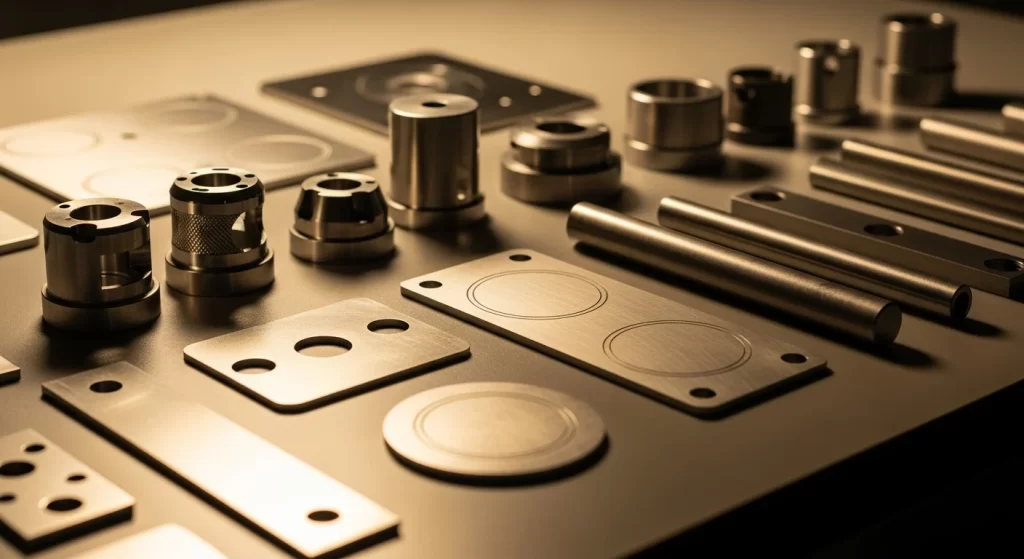
The versatility of PVD coating stems from the vast range of materials that can be used as the source material. From pure metals and complex alloys to durable ceramics, the options are extensive. Each material offers a unique set of properties, allowing you to tailor the thin film to meet specific functional and aesthetic requirements.
Whether you need a coating that is incredibly hard, resistant to corrosion, or has a specific color, there is likely a PVD material that fits the bill. Let’s look at some of the most common metals, alloys, and specialized materials used in various industries.
Popular Metals and Alloys for PVD: Titanium, Chromium, Zirconium, and Others
Certain metals and their alloys are workhorses in the PVD industry due to their excellent performance characteristics. As a solid material, they are ideal for creating hard, wear-resistant coatings that extend the life of tools and components. When these metals are combined with gases like nitrogen during the PVD process, they form ceramic compounds with even greater durability.
Some of the most popular metals and alloys include:
- Titanium: When combined with nitrogen, it forms Titanium Nitride (TiN), a very hard, gold-colored coating widely used on cutting tools and decorative items.
- Chromium: Used to create Chromium Nitride (CrN), which offers superior corrosion resistance and a silver-like appearance.
- Zirconium: Zirconium Nitride (ZrN) provides a pale gold finish that is extremely hard and durable, often used in medical implants and high-end fixtures.
- Aluminum: Often alloyed with titanium to create Titanium Aluminum Nitride (TiAlN), a coating that performs exceptionally well at high temperatures.
These materials are chosen for their ability to form dense, strongly bonded coatings that protect the underlying substrate from wear, friction, and environmental damage. The choice among them depends on the specific balance of hardness, lubricity, and corrosion resistance required.
Specialized PVD Coating Materials for Electronics, Tools, and Decorative Uses
Beyond the common metals, PVD utilizes a variety of specialized materials tailored for specific industries. The requirements for a semiconductor application are vastly different from those for a luxury watch, and the choice of material reflects this. These physical processes, conducted under a high vacuum, allow for the deposition of materials with unique electrical, optical, or aesthetic properties.
Different applications call for different materials. For example:
- Electronics and Semiconductors: In semiconductor applications, materials like tungsten, copper, and aluminum are used to create conductive layers and interconnects in microchips. Transparent conductive oxides, such as Indium Tin Oxide (ITO), are essential for touchscreens and solar cells.
- Decorative Finishes: For jewelry and high-end fixtures, PVD gold coatings offer a durable and brilliant finish that is much more resilient than traditional gold plating. Other materials can be used to achieve a wide spectrum of colors, including black, bronze, and iridescent tones.
- Cutting Tools: Advanced ceramic materials like Titanium Carbonitride (TiCN) and Aluminum Titanium Nitride (AlTiN) are used to create superhard coatings that can withstand the extreme conditions of high-speed machining.
The ability to deposit such a diverse range of materials with precision makes PVD an indispensable technology across many fields.
How Material Choice Influences Coating Colors and Surface Properties
The PVD material you choose directly affects the final product’s appearance and performance. During coating, a thin layer is deposited on the substrate, altering its properties—making material selection crucial for desired results.
Functionally, the material controls hardness, wear resistance, friction, and corrosion protection. For example, titanium-based coatings offer high hardness for cutting tools, while chromium-based coatings provide superior corrosion resistance for automotive parts.
Aesthetically, various materials enable a wide range of decorative finishes. The chosen material and PVD process determine the final color: Titanium Nitride yields classic gold; Zirconium Nitride gives a pale brass tone; other options produce black, gray, bronze, or rainbow effects. This versatility makes PVD ideal for product design and branding.
Key Factors in Selecting PVD Materials for Manufacturing
Choosing the right PVD material is a balancing act. You need to consider the desired performance of the coating, how it will interact with the substrate surface, and the overall cost-effectiveness of the manufacturing process. Your PVD equipment and its capabilities will also play a role in what materials you can effectively deposit.
To make the best decision, it’s helpful to break down the selection criteria into three main areas: performance requirements, substrate compatibility, and economic factors. By evaluating each of these, you can identify the optimal material for your specific needs.
Performance Requirements: Hardness, Adhesion, Corrosion Resistance
The primary reason for applying a PVD coating is to enhance the physical properties of a base material. Your first step in material selection should be to define the performance you need. Are you looking to make a product last longer, resist rust, or reduce friction? The answers will guide you toward certain classes of materials.
PVD coatings dramatically improve a material’s properties by adding a thin, high-performance layer. Key performance metrics to consider include:
- Hardness and Wear Resistance: For applications like cutting tools or engine components, hard coatings made from materials like Titanium Nitride (TiN) or Chromium Nitride (CrN) are essential. They create a protective barrier that prevents abrasion and extends service life.
- Corrosion Resistance: If your product will be exposed to moisture or harsh chemicals, selecting a material known for its excellent corrosion resistance is crucial. Chromium and its compounds are often a top choice for this purpose.
- Adhesion: The coating is only as good as its bond to the substrate. The chosen PVD material must adhere strongly to the base material to prevent chipping or flaking.
By clearly identifying your performance goals, you can narrow down the list of potential PVD materials and ensure the final coating meets your functional requirements.
Substrate Compatibility and Preparation Methods
A successful PVD coating relies on strong adhesion between the deposited film and the substrate. This makes substrate compatibility a critical factor in your material selection. Not all coating materials will bond equally well with all substrates, and the PVD process itself must be compatible with the base material’s properties, such as its melting point.
Before the coating process begins in the vacuum environment, the substrate surface must be meticulously prepared. This is a crucial step to ensure optimal adhesion. Preparation methods typically involve several stages, starting with a thorough cleaning to remove any oils, dirt, or oxides. This might include ultrasonic cleaning, solvent washing, or other chemical treatments.
After cleaning, the substrates are often placed in the vacuum chamber for an additional in-situ cleaning step, such as ion bombardment. This final etch removes any microscopic contaminants and slightly roughens the substrate surface, creating more anchor points for the coating to bond to. A properly prepared surface is the foundation for a durable and long-lasting PVD finish.
Economic Considerations: Availability and Cost-Efficiency for Equipment Batches
While performance is paramount, practical business considerations like cost and availability are also important. The price of the PVD material itself can vary significantly, and this cost will be passed on to the final product. You must balance the desired performance with a budget that makes sense for your market.
When evaluating the economics of a PVD material, consider the following:
- Material Cost: Precious metals like gold or platinum will naturally be more expensive than common materials like titanium or chromium.
- Availability: Some specialized materials may have limited suppliers or longer lead times, which can impact your production schedule.
- Process Efficiency: The deposition rate of a material affects the time it takes to coat equipment batches. A slower deposition process means longer cycle times and higher operational costs.
Ultimately, the goal is to find a material that delivers the necessary performance at a price point that provides good value. This cost-efficiency calculation is a key part of selecting the right PVD material for commercial manufacturing.
Industrial Applications and Advancements in PVD Material Technology
The applications of PVD are incredibly diverse, touching a wide variety of industries. From the intricate components in the semiconductor industry to the durable finishes on everyday consumer goods, PVD technologies have become indispensable. Continuous advancements in materials science are constantly expanding what is possible with PVD.
New alloys and composite materials are being developed to meet the growing demands for higher performance, greater durability, and unique aesthetic properties. Let’s examine how PVD is being used in specific industries and how expertise in material selection can optimize these applications.
Industry-Specific Solutions: Watchmaking, Medical Devices, Automotive, and More
PVD materials are used to create tailored solutions across many high-tech and consumer-facing industries. The unique benefits of PVD coatings—hardness, wear resistance, biocompatibility, and decorative appeal—make them ideal for a range of demanding applications.
Here are a few examples of how different industries leverage PVD:
- Medical Devices: Biocompatible materials like Titanium Nitride (TiN) and Zirconium Nitride (ZrN) are used to coat surgical instruments and implants. These coatings provide a hard, wear-resistant surface that is safe for human contact.
- Watchmaking and Jewelry: PVD is used to apply durable and attractive finishes. PVD gold, rose gold, and black coatings are popular in watchmaking because they resist scratches and wear far better than traditional plating.
- Automotive: In the automotive sector, PVD coatings are applied to engine components to reduce friction and improve durability. They are also used for decorative trim, providing a long-lasting, high-end finish that resists fading and corrosion.
Other major users include the aerospace, cutting tool, and semiconductor manufacturing industries, each relying on specific PVD materials to meet their unique performance standards.
How Foxin’s Expertise Supports Optimized PVD Material Selection
With years of experience in manufacturing advanced PVD equipment, we understand that the coating is only as good as the material and process used to create it. Our deep knowledge of PVD processes, from multi-arc ion plating to magnetron sputtering, allows us to guide our clients toward an optimized selection for their specific needs.
We help you navigate the complexities of material choice to ensure your PVD-coated products achieve the desired performance and appearance. Our support includes:
- Application Analysis: We work with you to understand your performance requirements, substrate materials, and budget to recommend the most suitable PVD materials.
- Process Optimization: Our expertise with different PVD systems means we can advise on the best process parameters to achieve consistent, high-quality results with your chosen material.
- Equipment Solutions: We provide coating systems and technical support to ensure you can efficiently deposit a wide range of materials, from standard metals to advanced ceramics.
By partnering with an experienced manufacturer like Foxin, you gain access to the knowledge needed to make informed decisions and achieve superior results in your coating operations.
Conclusion
Choosing the right PVD materials is essential for optimal thin film deposition. Understanding available materials, their properties, and their effects on end products helps manufacturers improve durability, aesthetics, and functionality. Whether working with metals like titanium and chromium or specialized coatings, consider substrate compatibility and cost for the best results. At Foxin, we’re here to support your PVD material selection and manufacturing needs. Contact us to see how our expertise can enhance your coating processes and grow your business.