



PVD Plating vs Electroplating: Which Finish Lasts Longer
PVD plating wins on durability, color control and environmental compliance. Electroplating wins on entry cost and raw speed for thin, bright gold. For parts that face skin, water or years of handling, the vacuum process usually repays its higher price.
PVD plating vs electroplating is a decision most hardware and jewelry brands meet at least once. The wrong call costs either margin or warranty claims. One process grows a film from metal vapor inside a vacuum chamber. The other plates metal out of a chemical bath using electric current. The physics differ, so the results differ in adhesion, thickness range, appearance and what each does to your wastewater bill. We have supplied PVD coating machines to hardware and jewelry factories for years. This guide settles the choice with numbers first. Then it gives you a short decision list for your own product line.
What Is PVD Plating?
PVD plating is the industry shorthand for physical vapor deposition. Metal is ionized inside a vacuum chamber, reacts with process gases, and condenses on parts as a dense film. Zirconium, titanium and chromium are the usual source metals. Nitrogen or acetylene turns them into nitrides and carbides.
The defining feature is environment. Nothing wet touches the part. Pressure runs between 10⁻¹ and 10⁻⁵ Pa, which is why the film can follow threads, recesses and polished faces with nearly uniform thickness. Decorative films land between 0.5 and 5 μm.
Cycle times run in hours rather than minutes. The economics follow from that: a vacuum line amortizes over batch size. More parts per cycle means lower cost per part.
What Is Electroplating?
Electroplating deposits metal by passing direct current through a bath that holds dissolved metal salts. The part is the cathode. Metal ions migrate to it and build up layer by layer. Gold, nickel, chrome and zinc plating all work this way.
The defining feature is chemistry. The bath does the work, so line speed can be high and equipment can start small. A benchtop rectifier and a beaker can plate rings. An automated line can plate tens of thousands of parts per day.
Thickness control is excellent, and true-metal finishes stay unmatched. But the film is metallic and far softer than ceramics. The process also generates wastewater that needs treatment before discharge, for every batch, forever.
Side-by-Side: PVD Plating vs Electroplating
The table below compares the two processes on the factors that actually decide purchase orders.
| Factor | PVD plating | Electroplating |
|---|---|---|
| Process environment | Vacuum, dry, 200–450 °C | Wet chemical bath, room temp |
| Film type | Ceramic nitrides and carbides | Pure metallic layer |
| Typical thickness | 0.5–5 μm | 0.1–25 μm |
| Hardness | 2,000–2,800 HV | Gold ~70 HV, hard chrome ~900 HV |
| Adhesion | Atomic bonding; passes bend tests | Good, but relies on clean activation |
| Color range | Golds, blacks, grays, bronzes, rainbows | Any metal color, incl. silver and rhodium |
| Substrate temperature | Warm; limits some plastics | Cold; plastics possible with prep |
| Wastewater | None | Continuous, needs treatment |
| Batch size per cycle | Rack-based, hundreds of parts | Continuous line, very high throughput |
Neither column wins everywhere. True silver-white finishes remain electroplating territory, because chrome-family PVD needs different chemistry to look white. But for gold tones and dark finishes on metal parts, the vacuum route now dominates new installations.
Can You Tell Them Apart by Eye?
Fresh parts look similar. Both can be bright gold, and both can be deep gunmetal. At delivery, most buyers cannot tell one from the other.
The difference shows up later. Plated parts wear through at edges and high points. Bare metal appears, and the damage is obvious. PVD films thin down gradually. The color holds until the last micron, so the part fades instead of failing.
There are small clues on new parts, if you look closely. Plating often reads brighter and colder, because the surface is pure metal. PVD gold reads slightly warmer and deeper, because the film is a ceramic nitride. In daily use, the two feel the same. Weight, smoothness and touch do not change. Only wear tests and years of handling reveal the real gap.
Which Finish Lasts Longer?
PVD lasts longer in almost every wear scenario that involves skin, water or abrasion. A gold-toned nitride film holds 2,000+ HV hardness against the ~70 HV of electroplated gold. It shrugs off keys, denim and cleaning agents that scratch plated surfaces within months.
Laboratory evidence points the same way. Salt-spray tests that decorative electroplate fails in 24–96 hours are typically passed by a PVD nitride at 200–500 hours or more. Real products confirm it. On taps and shower fittings, plated finishes pit and flake at the waterline within a few years. PVD-coated equivalents keep their color through a decade of daily use. We rank every common plating in our guide to which plating is the most durable.
Electroplating still holds one endurance advantage: thickness. Where a functional part needs 10–25 μm of metal, such as industrial gold contacts, baths build thickness economically. PVD runs slower past 3–5 μm.
Wear patterns differ in a way buyers should understand. Plating wears through at a weak spot and exposes bare metal, which reads as damage instantly. A nitride film thins gradually and holds its shade until nearly all of it is gone, so parts age gracefully instead of failing visibly.
What Does Each Process Cost?
Electroplating starts cheaper. PVD scales better. The equipment numbers make the crossover point obvious.
On the wet side, entry is modest. Benchtop rectifiers and tanks sell in the USD 100–1,000 range. Workshop-grade multi-tank setups land between USD 1,200 and USD 6,000. A full automated plating line for a factory sits between USD 5,000 and USD 150,000 depending on throughput and automation. Ongoing costs, though, never stop. Gold salts, bath maintenance and wastewater treatment follow every batch for the life of the line.
On the vacuum side, a batch machine for gold-tone decorative work prices roughly between USD 58,000 and USD 120,000. Large industrial chambers run higher. There is no wastewater line to run and no gold salt to buy. Electricity and source material drive the running cost. If you want the full cost anatomy, our PVD coating machine price guide itemizes each line.
The fair comparison is total cost per good part over a year, not sticker price. For low volumes, wet plating wins. Once daily volumes cross a few thousand parts, or once warranty claims from peeling plating start landing, PVD usually wins.
Which Industries Use Each One?
Electroplating still owns high-volume bright work and true-white finishes. Costume jewelry, zinc die-cast fittings, electronic connectors and anything needing rhodium white stay in the bath.
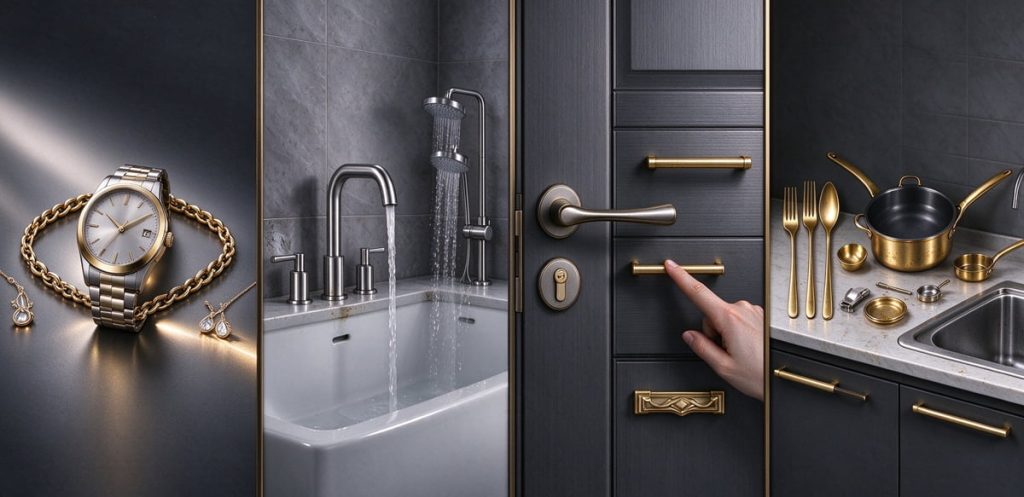
PVD has taken the segments where durability sells the product:
- Watches and jewelry — gold-tone cases and chains that pass sweat tests
- Sanitary and tapware — finishes rated for years of hot water and limescale
- Door and furniture hardware — touched daily, judged by hand
- Cutlery and kitchenware — dishwasher-safe gold-tone finishes
These four segments are the core market for our coating machines.
One more segment deserves mention. Automotive trim has split both ways at once. Bright exterior work stayed wet, while dark and bronze interior trim moved to vacuum. Watch any new car interior and you are looking at that split in trim form.
The jewelry case is instructive. A factory running a jewelry plating machine in vacuum can sell hypoallergenic, fade-resistant claims that bath-plated competitors cannot match. And when the product is gold-tone hardware at industrial volume, a dedicated gold PVD coating equipment line replaces both the plating line and its effluent plant.
Environmental Rules: Why Plants Switch to PVD
Compliance is the quiet reason many plating lines are being replaced. Electroplating discharge carries heavy metals and, for gold work, often cyanide chemistry. That ties a factory to permits, treatment plants and liability. Regulations on plating wastewater have tightened across the EU, US and China, and enforcement keeps climbing.
PVD generates no process wastewater at all. The vacuum chamber consumes electricity and source material, and spent filters are dry solids. For factories in water-scarce regions or strict jurisdictions, this alone settles the debate. Our guide to replacing chrome plating with PVD documents how one hardware plant retired its effluent treatment step entirely.
Insurance and audit costs rarely appear in quotes but belong in the math. A plating line needs chemical storage plans, spill kits and periodic inspections. A vacuum line needs none of that paperwork, which shrinks the hidden cost gap year after year.
How to Decide for Your Product Line
Run your products through this list. The decision usually makes itself:
- Is the finish a true metal color (silver, rhodium, raw zinc)? Electroplating.
- Is it a gold, bronze or dark decorative tone on metal? PVD.
- Will parts touch skin, water or food? PVD, for the inert film and nickel-free claim.
- Is volume under a few hundred parts per day? Outsource coating first. Buy equipment later.
- Does your plant face wastewater limits? PVD removes that exposure entirely.
- Do parts need more than 5 μm of functional metal? Electroplating still wins on thick films.
Many mature factories end up running both. Baths handle base layers and thick functional deposits. A vacuum machine adds the final decorative and wear layer on top. If your roadmap points that way, our zirconium nitride coating guide shows what a vacuum-side film stack looks like in practice.
When you are ready to price the vacuum side, send drawings and daily volume. We will run a coating trial on your parts and quote a line sized to your real output.
Frequently Asked Questions
Is PVD coating better than electroplating?
For wear life, color stability and environmental compliance, yes. For true metallic whites, very thick deposits and ultra-low entry cost, electroplating keeps the advantage. The right question is which factors your product actually sells on.
Does PVD replace electroplating completely?
No. Most PVD decorative stacks still use an electroplated or electroless nickel underlayer to level the surface and boost adhesion on rough substrates. The processes complement each other more than they compete.
Why is PVD more expensive than electroplating?
Vacuum chambers, pumps and fixturing cost more upfront than tanks and rectifiers. Cycle times run in hours rather than minutes. The gap closes at volume, because PVD has no gold salt consumption and no wastewater treatment cost per batch.
Can PVD coat plastics?
Yes, with conditions. Rigid plastics need a conductive basecoat and a low-temperature cycle under about 120 °C. Flexible plastics remain difficult because the ceramic film cracks when the substrate bends.
Which process is safer for workers?
Both have hazards, but of different kinds. Electroplating exposes workers to chemical baths, acid mists and cyanide salts in some gold lines. PVD’s risks are mostly electrical and hot surfaces, with no liquid chemistry in the room.
Can you do PVD plating at home?
No, not meaningfully. PVD needs a vacuum chamber, high-voltage power supplies and process gas control. Hobbyists can electroplate at home with kits, which is one more reason entry volumes favor the bath.
Does PVD plating need an underplate?
On rough or soft substrates, usually yes. A nickel underlayer levels the surface and gives the ceramic film a uniform base. On polished stainless and titanium, many shops deposit the nitride directly and skip the wet step entirely.
Who We Are
FOXIN builds PVD coating machines for hardware, jewelry and sanitary factories. The brand belongs to Guangdong Dishengxuan Technology. Before any machine ships, we test it inside our own coating plant. That means you sign off on measured results, not brochure claims. Read the company story before you talk to us.