






Why Arc Evaporation is Best for Premium Decorative Coatings
In today’s high-end manufacturing sector, decorative coatings are no longer just about aesthetics—they serve as critical carriers of product quality, durability, and brand value. Whether for luxury timepieces, premium bathroom hardware, automotive interiors, or consumer electronics, consumer expectations for surface finishing are undergoing a profound shift:
- From simple “color coverage” to a comprehensive demand for “authentic metallic finish + extreme durability + environmental compliance”
- Traditional electroplating processes face mounting regulatory pressure due to restrictions on heavy metal emissions such as hexavalent chromium, driving manufacturers to seek alternatives like cathodic arc evaporation PVD
- Physical Vapor Deposition (PVD) technology has emerged as the mainstream replacement for conventional electroplating, with cathodic arc evaporation standing out in the decorative coatings segment
- Standard magnetron sputtering shows limitations in decorative applications: weaker metallic bonding, grayish color tones, and relatively lower film density, making it difficult to meet premium decorative coating requirements
Against this backdrop, Cathodic Arc Evaporation technology has gradually become the preferred solution for premium decorative coatings, thanks to its unique physical mechanism. Arc evaporation utilizes high-current arcs to instantly vaporize target materials, generating a highly ionized plasma cloud that enables atomic-level deposition—providing an exceptional performance foundation for decorative coatings.
Advantage 1: Superior Adhesion and Film Densification of Arc Evaporation Decorative Coatings
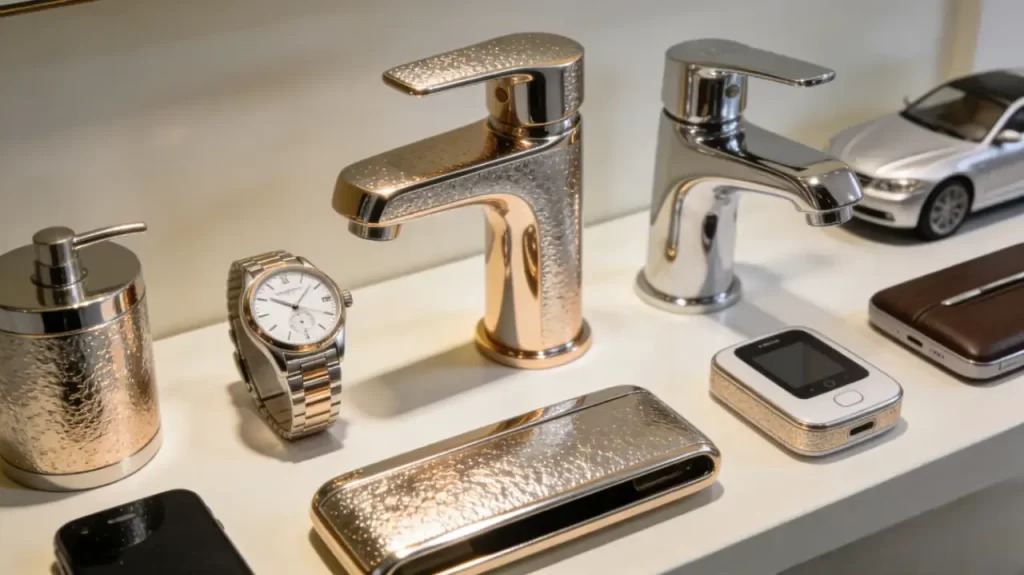
The core competitive advantage of arc evaporation technology in the decorative coatings field lies in its ability to form coating structures with exceptional adhesion and extremely high density—a critical consideration for premium decorative coating process selection.
- Technical Core: High Ionization Rate
- Ionization rate comparison: Plasma ionization in standard magnetron sputtering is typically only 1%-5%, whereas cathodic arc evaporation PVD achieves 60%-90%
- High-energy ion bombardment: A high proportion of ions, accelerated by substrate negative bias, attain kinetic energy ranging from tens to hundreds of electron volts, significantly enhancing decorative coating adhesion strength
- Pseudo-diffusion layer formation: High-energy ions penetrate the substrate’s surface crystal lattice, forming metallurgical-grade chemical bonds that substantially improve the interfacial bonding strength of arc evaporation decorative coatings
- Dense Microstructure Analysis
- Conventional sputtering tends to produce loose columnar crystal structures, allowing corrosive media to penetrate along grain boundaries and compromising decorative coating corrosion resistance
- High-energy ion bombardment in arc evaporation promotes surface atom migration, suppresses columnar grain growth, and enables decorative coatings to form dense, pore-free non-columnar structures (Zone T structure)
- Significantly enhanced film density reduces porosity, effectively blocking moisture, salt spray, and other corrosive media from reaching the substrate
- High-density decorative coatings deliver greater film hardness, effectively resisting external mechanical stress and extending product service life
- Authoritative Test Data Support
- Adhesion (ASTM D3359): Standard requires ≥3B; arc evaporation decorative coatings consistently achieve 5B rating
- Microhardness (TiN/TiCN/ZrN): Standard sputtering ~1500 HV; arc evaporation PVD coatings reach 2000-2500 HV
- Neutral Salt Spray (NSS) Test: Standard ≥200 hours; decorative PVD coatings for bathroom hardware easily exceed 500 hours, with specialized processes surpassing 1000 hours
- Customer Value Proposition
- Products with arc evaporation decorative coatings demonstrate significantly extended service life and reduced after-sales repair rates
- High-frequency contact components (door handles, watch cases, smartphone frames) effectively resist daily wear, sweat corrosion, and accidental scratches
- Enhanced brand reputation and user satisfaction, strengthening market competitiveness of premium decorative coating products
Advantage 2: Vibrant Metallic Finish and Broad Color Gamut with Arc Evaporation PVD
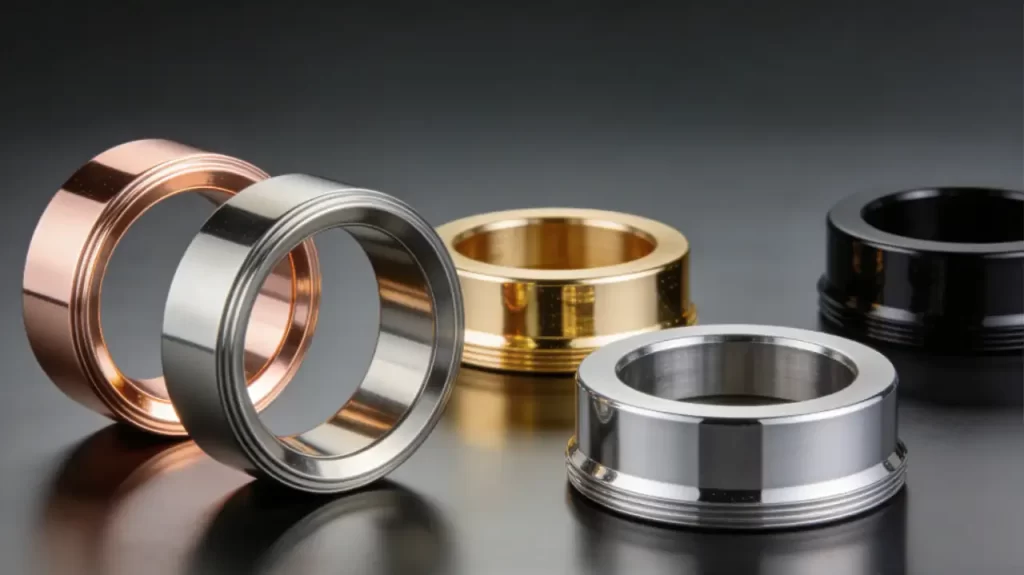
Aesthetic performance represents another core value of decorative coatings. Arc evaporation PVD technology offers inherent advantages in restoring authentic metallic appearance and enhancing color saturation, meeting designers’ stringent requirements for “genuine metallic texture.”
- Direct Evaporation Characteristics of Alloy Targets
- Arc evaporation more readily accommodates alloy targets such as copper-zinc (Cu-Zn) and zirconium-copper (Zr-Cu), providing flexible solutions for decorative coating color customization
- Alloy targets directly vaporize under arc high temperatures, maximizing retention of metallic bonding characteristics and enabling decorative coatings to exhibit authentic metallic texture
- Example: For rose gold coatings, arc evaporation produces deposited films with Cu-Zn ratios closer to genuine alloys, delivering warm, deep metallic luster
- Avoids the grayish tones or “plastic-like” appearance sometimes associated with sputtering processes that rely on reactive gas ratio adjustments, enhancing visual quality of premium decorative coatings
- Color Saturation and Visual Texture
- High-density decorative coatings reduce light scattering and enhance specular reflection, improving metallic texture perception
- In the CIE Lab* color space, arc-evaporated gold, rose gold, and champagne gold decorative coatings exhibit higher color saturation (chroma)
- In warm color tones, arc evaporation decorative coatings achieve depth unattainable with conventional processes, avoiding “washed-out” or “floating” color appearances
- Visual weight and depth serve as key differentiators between luxury products and mass-market items, enabling brands to achieve visual premium positioning
- Color Consistency Control Capability
- Arc evaporation decorative coatings exhibit low sensitivity to film thickness variations regarding color, providing a wider process control window and higher production stability
- Advanced optical monitoring systems combined with power supply feedback control enable batch-to-batch color variation to be maintained within ΔE < 1.0, or even ΔE < 0.5 for premium applications
- Fully meets stringent color consistency standards demanded by international luxury brands, ensuring unified product image across global markets
- Customer Value Proposition
- Enhanced visual premium positioning for products with arc evaporation decorative coatings; authentic metallic texture strengthens consumer purchase intent
- Consistent product image across global markets preserves brand prestige and reduces return risks associated with color variation
- Flexible PVD coating color customization solutions support brand differentiation requirements and improve supply chain efficiency
Advantage 3: High Deposition Rate and Scalable Mass Production for Arc Evaporation Decorative Coatings

Beyond performance and aesthetics, production efficiency and cost control remain critical in manufacturing. Arc evaporation technology demonstrates significant economic advantages in deposition rate and production scalability.
- Significant Efficiency Advantage in Deposition Rate
- Standard magnetron sputtering deposition rate: 1-3 μm/h, often insufficient for large-scale decorative coating production demands
- Cathodic arc evaporation deposition rate: 5-10 μm/h, 3-5 times faster than sputtering processes
- Under identical film thickness requirements, arc evaporation decorative coating production cycles can be reduced by over 50%
- For large-scale urgent orders, the efficiency advantage of arc evaporation PVD translates into significant lead time competitiveness
- Loading Capacity and Energy Optimization
- Arc sources feature high plasma density and large effective coating zones, suitable for large-format components or high-density fixture loading
- Within the same vacuum chamber footprint, arc evaporation decorative coating processes can accommodate more parts per batch, increasing single-run throughput
- Shorter process times reduce energy consumption per unit, supporting corporate green manufacturing objectives
- Return on Investment (ROI) Analysis
- For large-volume orders, comprehensive per-unit costs using arc evaporation decorative coating processes can be reduced by 20%-30%
- High throughput improves equipment utilization rates, ensuring delivery stability during peak seasons
- Mitigates order loss risks associated with capacity constraints, enhancing overall market competitiveness
- Customer Value Proposition
- Achieve more competitive cost structures while maintaining premium decorative coating quality standards
- Rapidly respond to market trend shifts and capture market share in seasonally-driven consumer electronics segments
- Support small-batch customized production to meet brand differentiation needs, enhancing the application value of arc evaporation PVD technology
Technical Challenge and Solution: Macroparticle Control in Arc Evaporation Decorative Coatings
Objectively, traditional arc evaporation technology has historically faced one primary challenge: macroparticle (droplet) formation. As arc spots move rapidly across the target surface, micron-scale liquid metal droplets may be ejected and deposit on component surfaces, potentially affecting decorative coating surface quality.
- Modern Industrial-Grade Solutions
- Filtered Cathodic Arc (FCA) Technology
- Specialized magnetic field design bends the plasma transport path, optimizing deposition quality for arc evaporation decorative coatings
- Charged ions are guided by the magnetic field to reach the substrate, while neutral macroparticles travel linearly due to inertia and are blocked by baffles
- Physically eliminates macroparticle issues, ensuring surface finish quality for premium decorative coatings
- Pulsed Arc Power Supply
- Pulse technology controls arc dwell time to reduce localized target overheating
- Minimizes droplet ejection at the source, improving surface consistency of arc evaporation PVD coatings
- Pre- and Post-Treatment Processes
- Integration of ultrasonic cleaning, vibratory finishing, or nano-polishing techniques further optimizes decorative coating surface quality
- With advanced modern processes, arc evaporation decorative coatings can achieve surface roughness Ra values < 0.05 μm
- Filtered Cathodic Arc (FCA) Technology
Typical Application Cases for Arc Evaporation Decorative Coatings
- Watchmaking and Jewelry Industry
- Premium watch cases and bracelets utilize arc evaporation decorative coatings for sweat resistance and daily wear durability
- Decorative coating processes for watch cases require long-term luster retention without fading—arc evaporation PVD fully meets these demands
- Bathroom Hardware Industry
- Showerheads, faucets, and other bathroom hardware with decorative PVD coatings exceed 500-hour salt spray test standards
- Resists mold growth and delamination in high-humidity environments, solving blistering issues common with traditional electroplating and enhancing product durability
- Automotive Interior Industry
- Control buttons and door trim components require resistance to fingerprints, UV aging, and chemical exposure
- Arc evaporation decorative coatings provide reliable protective barriers, enhancing interior texture quality and service life
- Smart Home and Consumer Electronics
- High-friction components such as smart locks and smartphone frames leverage the superior wear resistance of arc evaporation PVD
- Maintains refined tactile feel while supporting flexible PVD coating color customization solutions to meet personalized and premium market demands
Conclusion: Cathodic Arc Evaporation PVD as the Core Basis for Premium Decorative Coating Process Selection
In summary, cathodic arc evaporation technology delivers comprehensive advantages across three key dimensions, establishing it as the “gold standard” in the premium decorative coatings sector:
- Superior Adhesion: High ionization enables metallurgical-grade bonding and pore-free film density, significantly enhancing decorative coating durability
- Authentic Metallic Finish: Direct alloy target evaporation delivers high color saturation and outstanding visual texture, meeting premium aesthetic requirements
- Efficient Mass Production Capability: Fast deposition rates, lower unit costs, and high ROI support corporate cost optimization and scalability
For manufacturing enterprises pursuing exceptional quality, selecting arc evaporation decorative coatings represents more than just a process choice—it embodies a strategic decision to:
- Adopt a technical solution that enhances product competitiveness and meets comprehensive requirements for premium decorative coating process selection
- Pursue a long-term strategy aligned with environmental trends, leveraging arc evaporation as an eco-friendly metal surface treatment technology to mitigate heavy metal contamination risks
- Implement a solution that satisfies dual demands for aesthetics and performance in premium markets, enabling brand differentiation and competitive advantage
Frequently Asked Questions (FAQ)
- In decorative coatings, is arc evaporation always superior to magnetron sputtering?
- In terms of metallic texture, adhesion strength, and deposition efficiency, arc evaporation PVD offers distinct advantages
- Arc evaporation decorative coatings are particularly well-suited for premium decorative components requiring wear resistance and authentic metallic appearance
- For ultra-smooth optical mirrors or semiconductor applications, conventional sputtering retains specific use cases
- With advances in filtered arc technology, the performance gap between arc evaporation PVD vs. magnetron sputtering in decorative applications has significantly narrowed
- Final selection should be based on comprehensive evaluation of substrate material, component geometry, and performance requirements to identify the optimal premium decorative coating process
- What colors can arc evaporation PVD achieve?
- Extremely broad color gamut coverage: gold, rose gold, black, gunmetal, champagne, and other classic decorative coating colors
- Supports blue, purple, and custom alloy colors to meet diverse PVD coating color customization solution requirements
- By adjusting gas flow, bias voltage, and target composition, virtually any metallic hue can be replicated
- Multi-layer film stack designs enable special optical effects such as interference colors, expanding application possibilities for arc evaporation decorative coatings
- Do arc evaporation coatings contain hazardous substances?
- Free of hexavalent chromium, cyanides, and other heavy metals; as an eco-friendly metal surface treatment technology, fully aligned with green manufacturing principles
- Vacuum-based dry process with minimal wastewater discharge, reducing corporate environmental compliance costs
- Fully compliant with international environmental standards including RoHS and REACH, supporting green supply chain certification
- Arc evaporation decorative coatings represent a preferred solution for enterprises addressing environmental regulatory pressures and pursuing sustainable development
- Will arc coatings affect component dimensional precision?
- Decorative coating thickness typically ranges from 0.3-5 microns—a micron-level deposition with minimal dimensional impact
- For most precision-fit components, arc evaporation decorative coatings generally do not affect assembly tolerances
- Components with ultra-high precision requirements can accommodate process-controlled tolerance allowances or post-coating precision grinding
- For threaded or other precision features, pre-coating protection or post-coating threading is recommended to ensure compatibility between arc evaporation PVD processes and precision manufacturing requirements