






PVD Finish Meaning: Expert Care & Maintenance Guide
Have you ever had an experience like this: You spend a significant amount of money on a faucet, watch, or knife. When you first get it, the texture is premium and the luster is captivating. But after using it for a short time, the surface starts to look foggy, fine scratches appear, or it even subtly changes color? Many people’s first reaction is “I bought a lemon,” but the problem might not lie with the product itself, but rather with how we treat it.
When we delve deeply into pvd finish meaning, we discover that while PVD coating is indeed hard and wear-resistant, it is not synonymous with “maintenance-free.” Just like even the best skin needs correct skincare, even high-end pvd coating fears the wrong methods. Actually, by understanding a little bit about its “temperament” and avoiding a few common cleaning mistakes, daily care can be both simple and effective. Next, let’s start from the coating’s “origin story” and step-by-step tell you: how to keep it looking as exquisite as when it left the factory for a long time, and how to correctly understand pvd finish meaning to make wise purchasing decisions.
1. Technical Deep Dive: Deconstructing the Physicochemical Essence of pvd finish meaning
To truly understand how to maintain pvd finish, you must first understand what pvd finish meaning actually is. Often, consumers are confused by marketing buzzwords like “space technology” or “nanotechnology.” But stripping away these marketing layers, the core logic of physical vapor deposition is very clear.
1.1 Not Electroplating, but “Vacuum Coating”
Traditional electroplating involves immersing the workpiece in chemical solutions containing metal ions and using current to deposit metal on the surface. While low-cost, this method easily produces waste liquid pollution, and the coating adhesion is relatively weak. The key to understanding pvd finish meaning lies in this: it is a vacuum coating process conducted in a completely sealed high-vacuum chamber, fundamentally eliminating chemical solution residue.
Before deposition begins, the machine evacuates the air from the chamber. The vacuum level usually needs to reach 10^-3 to 10^-5 Pascals (Pa). What does this concept mean? This is nearly 100 million times lower than normal atmospheric pressure on Earth’s surface. In this near-absolute vacuum environment, there are very few residual gas molecules, thereby avoiding the mixing of oxidized impurities and ensuring the purity of the pvd coating. This is the foundation of pvd finish durability and one of the key indicators distinguishing small workshops from formal pvd coating manufacturer facilities.
Subsequently, through arc discharge or magnetron sputtering technology, working gases (such as nitrogen, acetylene, oxygen, etc.) are introduced to generate high-temperature plasma within the chamber. Target materials (high-purity metals like titanium, zirconium, chromium, etc.) evaporate or sputter under ion bombardment, forming metal vapor. These metal atoms react with the gas in the plasma field to become ionized, forming positively charged metal ions. This step is key to pvd finish formation, ensuring material activity.
Guided by a high-voltage electric field (typically -50V to -1000V bias), high-energy metal ions accelerate and bombard the workpiece surface. This high-energy bombardment not only cleans the oxide layer on the substrate surface but also embeds deposited atoms into the substrate lattice, forming a so-called “pseudo-diffusion layer.” This makes the bond between pvd coating and the substrate not simple physical adhesion, but reaches a level close to metallurgical bonding. Simply put, it is not “stuck” on the surface, but “grown” on the surface, which greatly improves adhesion and makes it difficult to peel off. High-quality professional pvd coating services will strictly control the parameters of this process to ensure adhesion meets the highest standards.
1.2 Hardcore Data: How Hard Is It Really
We often hear people say pvd finish is wear-resistant, but “wear-resistant” is a vague concept. We need to quantify it with data. The microhardness of ordinary stainless steel surfaces is about 200HV (Vickers Hardness), meaning it is easily scratched by keys or gravel. Under formal processes, pvd coating hardness is usually between 1000HV and 3000HV, and some multi-layer nano-composite coatings can even reach above 4000HV. This hardness is close to sapphire. This hardness difference directly determines the level of pvd finish hardness and scratch resistance.
Coating thickness is generally controlled between 0.5 microns and 5 microns. This thickness is sufficient to provide protection without significantly altering the dimensional accuracy of the workpiece. Imagine building a protective shield ten times harder than steel on a thickness that is one-tenth of a human hair’s diameter (about 50-70 microns). This high hardness characteristic makes pvd finish perform excellently in resisting daily scratches.
However, it is important to note that high hardness also brings the characteristic of “hard but brittle.” This means its impact resistance is not as good as tough materials; it is prone to cracking when hit sharply by hard objects. So, although it is wear-resistant, it fears dropping and smashing. Understanding this characteristic of pvd finish meaning helps us avoid hard collisions during use and also reminds purchasers that when selecting a pvd coating manufacturer, they should inquire about the coating’s toughness test data.
1.3 Optical Principles of Color Formation
The color of pvd finish does not come from dyes but originates from the thin-film interference effect. By precisely controlling the ratio of reactive gases (such as the flow ratio of nitrogen to acetylene) and the coating thickness, the path of light reflection and refraction on the coating surface can be changed, thereby presenting rich pvd finish colors, such as rose gold, black, gunmetal, champagne gold, etc. This is physical coloration, not chemical dyeing, so the color is more stable. This is also why high-end hardware surface treatment prefers PVD.
For example, black coatings are usually formed by introducing a carbon source to create titanium carbonitride (TiCN) or higher carbon content structures, increasing the light absorption rate. Understanding the optical principles in pvd finish meaning is crucial because chemical corrosion often destroys this precise thin-film structure, leading to color distortion or rainbow patterns. Once the optical structure is destroyed, the color cannot be restored.
Different target material combinations determine the chemical stability of the coating. For instance, the gold formed by zirconium targets usually has slightly stronger pvd finish corrosion resistance than gold formed by titanium targets. Although black coatings are dirt-resistant, because of their high light absorption rate, fine scratches on the surface are visually more obvious than on light-colored coatings. This is also why black pvd finish products need more careful care; they expose flaws more easily. Professional surface treatment manufacturers will provide specific pvd finish maintenance tips for different colors.
2. Failure Mechanism Analysis: Why Is the pvd finish Surface Damaged
Although pvd coating possesses high hardness and corrosion resistance, in actual use environments, it still faces the triple threat of physical wear, chemical corrosion, and electrochemical corrosion. Understanding these failure mechanisms is the premise for formulating a pvd finish care guide. Often, coating damage is not because it is “poor quality,” but because it encountered its “nemesis,” or there were micro-defects in the initial pvd finish process.
2.1 Physical Wear: Abrasive Wear and Micro-cutting
Although pvd finish hardness is extremely high, dust in the environment often contains quartz (silicon dioxide) particles, whose Mohs hardness can reach 7, and microhardness is about 1200HV. When dry dust adheres to the coating surface, if the user wipes it with a rough cloth, dust particles will act as “abrasives,” producing a micro-cutting effect on the coating surface. This is the most common source of damage and the first problem how to clean pvd finish needs to solve.
This damage initially manifests as micro-scratches invisible to the naked eye. After accumulation, it destroys the surface smoothness, leading to increased diffuse reflection, making the original mirror or brushed effect become dim and lusterless, commonly known as “fogging.” Once the surface fogs, it is difficult to restore the luster through simple cleaning. Additionally, although the coating is hard, it is brittle. When subjected to sharp impact from hard objects, brittle fracture may occur, leading to local chipping or peeling.
This is why we emphasize “remove dust first, then wipe.” Because dry wiping with a dusty cloth is essentially using sandpaper. Many users complain that pvd coating is not wear-resistant, but most wear is artificially caused during the cleaning process. The correct cleaning order can avoid more than 80% of physical damage. If you find the product wears easily, you may need to evaluate whether the coating density of that pvd coating manufacturer meets standards, which is also an important part of understanding the quality dimension of pvd finish meaning.
2.2 Chemical Corrosion: Destruction of the Passive Film
The corrosion resistance of pvd finish mainly relies on the dense oxide passive film formed on its surface. However, this film is not stable in extreme chemical environments. First is halogen ion erosion. Chloride ions (Cl⁻) are the biggest chemical enemy of pvd coating. Chloride ions have a small radius and strong penetrating power. They easily adsorb at micropores or defects on the coating surface, displacing oxygen ions in the oxide film to form soluble chlorides, thereby destroying the passive film.
Once the passive film is damaged, corrosive media will reach the substrate directly. This corrosion is often hidden; it cannot be seen on the surface, but rusting has already started inside. Secondly is acid-base erosion. Strong acid (pH < 4) or strong alkali (pH > 9) environments will accelerate the hydrolysis reaction of metal nitrides or carbides. For example, under acidic conditions, TiN coating may react to generate titanium ions and ammonium ions, leading to increased surface roughness and decreased gloss.
This is also why bathroom cleaners cannot be used casually. Many strong descalers can remove limescale but will also corrode the pvd finish simultaneously. When choosing cleaners, you must check the ingredient list and avoid strong acids and bases. Chemical damage is usually irreversible; prevention is far more important than repair. High-quality vacuum coating processes will enhance the stability of the passive film through multi-layer composite structures, which is also the core guarantee of pvd finish durability.
2.3 Electrochemical Corrosion: Micro-battery Effect
pvd coating is not absolutely dense; there may be pinholes on a microscopic scale. When an electrolyte solution (such as sweat, salt water, cleaner residue) exists on the coating surface, a micro-galvanic cell may form between the coating and the substrate metal. This is a problem users in coastal areas or those who frequently contact sweat need to pay special attention to, and it is also content that needs to be emphasized in pvd finish maintenance tips.
Since the potential of the substrate metal (such as stainless steel, copper alloy) is usually lower than the coating potential, the substrate becomes the anode, and the coating becomes the cathode. At the micropores, the substrate metal will undergo accelerated corrosion. The volume expansion of corrosion products will then lift the surrounding coating, causing the coating to blister and peel. This phenomenon is particularly common on wearables in coastal high-salt fog areas or those in long-term contact with sweat.
Often when you see rust under the coating, it is not the coating itself rusting, but the metal underneath “breathing” corrosive substances through micropores. This corrosion often starts from the inside. Once surface blistering is found, it usually means the damage is irreversible. Keeping the surface dry is the most effective means to prevent electrochemical corrosion. This is also why the polishing quality and cleanliness of the substrate material are crucial before pvd finish. Professional pvd coating manufacturer will strictly control the pre-treatment process.
3. Standard Cleaning SOP: Operating Procedures for Scientifically Maintaining pvd finish
Based on the above failure mechanisms, we have formulated a Standard Operating Procedure (SOP) aimed at maximizing the reduction of risks during the cleaning process. This process applies not only to home users but also to after-sales maintenance in high-end retail stores. Following this pvd finish care guide can maximize the life of pvd coating.
3.1 Professional Selection of Cleaning Tools
To do a good job, one must first sharpen one’s tools. The choice of cleaning tools directly determines the execution effect of pvd finish maintenance tips.
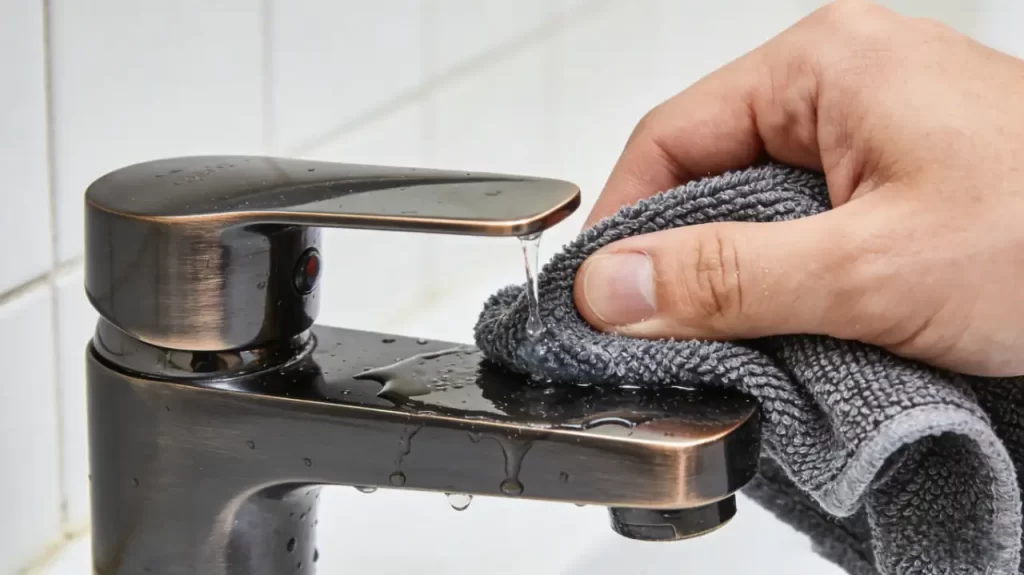
- Preferred Cloth: Microfiber. High-quality microfiber diameter is only 1/100 of a human hair, possessing extremely strong adsorption capacity, capable of capturing micro-dust rather than pushing it. It is recommended to choose double-sided fleece fabric with a density above 300gsm. This fabric is soft and highly absorbent, effectively wrapping dust particles to avoid scratching the pvd finish surface.
- Prohibited Tools: Paper towels, old cotton towels, or hard scouring pads. The former may contain hard wood fiber particles, while the latter directly constitutes a source of abrasive wear.
- Auxiliary Tools: For workpieces with many gaps (such as faucet aerators, watch chain links), a soft-bristled brush can be used. The brush material should be nylon or natural boar bristle, with a hardness level between “soft” to “medium-soft.” Avoid using wire brushes. Additionally, prepare an air blower (similar to those used for cleaning camera lenses) for dust removal, and lint-free cotton swabs for detail cleaning. These tools are low cost but significant in effect.
3.2 Chemical Indicators for Cleaners
The choice of cleaners must strictly follow the principle of chemical neutrality. This is the core point of how to clean pvd finish.
- pH Control: The ideal cleaner pH value should be controlled between 6.5 and 7.5. Any cleaner deviating from this range will pose a potential threat to the pvd coating passive film with long-term use.
- Ingredient Prohibitions: Ensure the cleaner does not contain ammonia, bleach (such as sodium hypochlorite), abrasive particles (such as calcium carbonate, diatomaceous earth), or strong organic solvents.
- Recommended Formula: The safest and most economical solution is to use deionized water or distilled water with a small amount of neutral dish soap. For stubborn oil stains, a solution with less than 30% Isopropyl Alcohol (IPA) content can be used, but it must be wiped dry quickly to avoid solvent retention. Many people like to use glass cleaners, but pay attention to the ingredient list. Ammonia-containing glass cleaners are a major taboo for pvd finish; ammonia molecules will destroy the structure of metal nitrides.
3.3 Importance of Water Quality
Many people ignore the impact of water itself on pvd finish. This is a detail often overlooked in pvd finish maintenance tips.
- Hard Water Hazards: Hard water contains high concentrations of calcium and magnesium ions (Ca²⁺, Mg²⁺). After water evaporation, white limescale (calcium carbonate deposition) remains. These scales not only affect appearance but their crystal structure may also scratch the coating.
- Solution: In hard water areas (total hardness > 150ppm), it is recommended to use distilled water or water treated by Reverse Osmosis (RO) for the final rinsing step.
- Temperature Control: Cleaning water temperature is recommended to be controlled between 20℃ and 40℃. Overly hot water may accelerate the reaction of chemical residues, while overly cold water is not conducive to oil emulsification. If you find white spots on your home faucet frequently, it is likely a water quality issue. At this point, improving water quality is more fundamental than replacing pvd coating.
3.4 Standardized Cleaning Steps
- Step 1: Dry Dust Removal. Before contacting liquid, use an air blower or soft brush to remove surface floating dust. This step eliminates more than 80% of abrasive wear risks and is the key starting point of how to clean pvd finish.
- Step 2: Wetting the Medium. Spray the cleaner onto the microfiber cloth to make it slightly damp, rather than spraying directly on the workpiece surface. Direct spraying may cause liquid to seep into workpiece gaps, bearings, or internal circuits, triggering internal corrosion or failure.
- Step 3: Unidirectional Wiping. Wipe unidirectionally along the texture direction of the workpiece surface (such as brushed grain). Avoid circular wiping, because swirls left by circular wiping will be very obvious under light and difficult to repair. For mirror pvd finish, a “well” shaped cross light wipe can be used, but the force must be extremely light.
- Step 4: Immediate Drying. After cleaning, immediately use another dry microfiber cloth to wipe off surface water stains. Do not let water air dry; this is the most critical step to prevent limescale formation.
- Step 5: Gap Cleaning. For workpieces with complex structures, use lint-free cotton swabs dipped in a small amount of cleaner to clean gaps, and dry immediately. The whole process should be gentle and quick, avoiding cleaner staying on the surface for too long.
4. Cleaning “Blacklist”: Substances and Environments Absolutely Prohibited from Contact
To guarantee the integrity of pvd finish, users must establish a clear “prohibition list.” The following substances and environments should be strictly avoided in daily use. This is not only maintenance advice from a pvd finish care guide but also a usage red line. Once contacted, the consequences are often irreversible.
4.1 Chemical Reagent Prohibitions
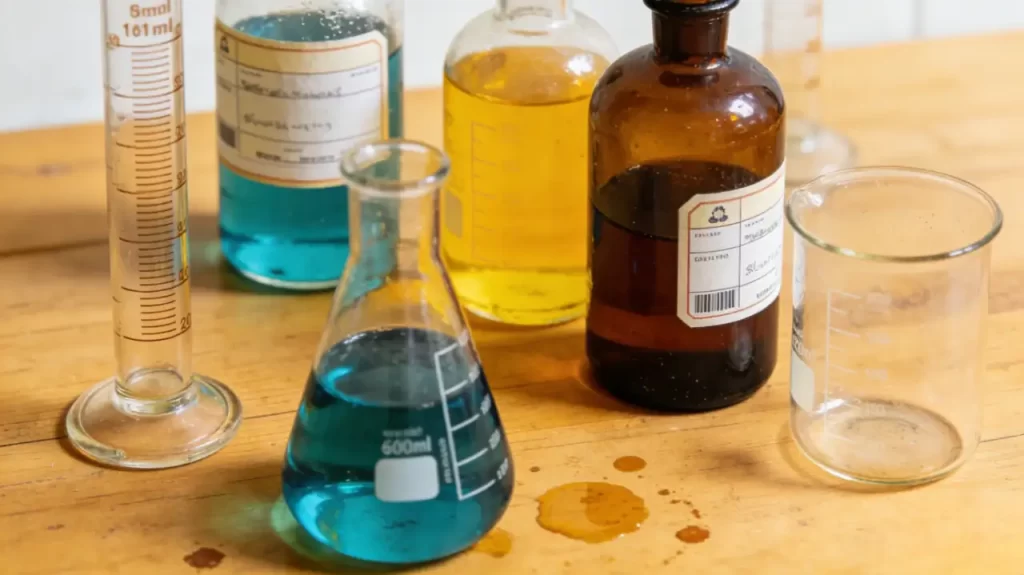
- Chlorine-containing Bleach: Primary prohibition, common in household disinfectants and clothing bleaches. Chloride ions will quickly penetrate coating micropores, leading to substrate pitting. This corrosion often starts from the inside; it looks fine on the surface but is actually damaged.
- Strong Acid Descalers: Must also stay away, such as bathroom cleaners containing hydrochloric or sulfuric acid. Although they can quickly remove limescale, they will simultaneously dissolve the passive film on the pvd finish surface, leading to coating loss of luster or even color change. This loss of luster is permanent.
- Ammonia Cleaners: Common in glass cleaners. Ammonia molecules have extremely strong permeability and may form complexes with metal ions in the coating, destroying the surface structure.
- Organic Solvents: Such as acetone, thinner, nail polish remover, etc. Although pvd coating itself is solvent-resistant, these solvents may dissolve the primer (if any) or adhesive at the bottom of the coating, causing the coating to peel off entirely.
- Abrasive Cleaning Products: Such as scouring powders, toothpaste, hand washes containing scrubbing particles. The hardness of the solid particles far exceeds the coating surface roughness tolerance limit, causing permanent scratches and turning a mirror surface into a matte surface.
4.2 Special Environment Warnings
- Pools and Seawater: Chlorine concentration in pool water is usually maintained at 0.3-0.5mg/L, while seawater contains about 3.5% salt. After swimming with pvd finish jewelry, it must be thoroughly rinsed with fresh water within 5 minutes. Long-term immersion will cause the coating edges to corrode first, because the coating at edges is usually thinner and has weaker protection.
- Saunas and Hot Springs: High-temperature and high-humidity environments will accelerate sulfide corrosion of the coating. Especially sulfur-containing hot springs will cause silver or light-colored pvd coating to rapidly sulfide and turn black. This color change is similar to silver oxidation but harder to clean. Additionally, high temperatures may increase the difference in thermal expansion coefficients between the substrate and coating, producing micro-cracks.
- Industrial Environments: In chemical laboratories or industrial environments where acid-base vapors or organic solvent vapors are contacted, it is not recommended to wear or use pvd finish products. Because gaseous corrosives are harder to prevent than liquids; they are omnipresent.
5. Scenario-specific Maintenance Practical Guide
Under different application scenarios, the challenges faced by pvd finish vary, requiring targeted maintenance strategies. We will provide specific solutions for the three most common scenarios to help users solve problems in real life. The following uses a structured guide for quick reference, which is also a practical embodiment of pvd finish maintenance tips.

5.1 Kitchen and Bath Hardware (Faucets, Showers, Door Handles)
- Pain Points: Limescale deposition, fingerprint oil stains, hard water spots.
- Countermeasures: After each use, wipe off surface water droplets with a soft cloth; perform a deep cleaning once a week, and simply wipe after daily use. If slight limescale has formed, soak a soft cloth in a citric acid solution with a concentration of less than 5%, apply it to the surface for 3-5 minutes, then immediately rinse with plenty of water and dry.
- Special Note: Strictly prohibit long-term soaking in acidic substances; black pvd finish faucets show limescale more obviously, it is recommended to use distilled water as the final rinse water; for brushed surfaces, be sure to wipe along the brushed texture. Wiping against the grain will destroy the consistency of the texture. This is the core maintenance point of pvd finish for bathroom fixtures.
5.2 Watches and Jewelry (Watch Cases, Rings, Necklaces)
- Pain Points: Sweat corrosion, cosmetic residue, physical bumps.
- Countermeasures: Wipe off sweat after wearing; avoid direct contact with perfume and hairspray; after wearing during sports or in summer, be sure to wipe the watch case and the back of the strap with a slightly damp soft cloth to prevent sweat crystal corrosion.
- Ultrasonic Cleaning: Use with caution; manual cleaning is recommended. Although ultrasonics can clean gaps, high-frequency vibration may expand micro-cracks in existing pvd coating. For valuable PVD watches, manual cleaning is recommended. When not wearing, put in a sealed bag or jewelry box to reduce contact with air sulfides. This is the professional maintenance advice for pvd finish for watches.
5.3 Knives and Tools (Kitchen Knives, Scissors, Industrial Blades)
- Pain Points: Food acidic substances, cleaning wear, dishwasher damage.
- Countermeasures: Hand wash primarily, avoid dishwashers; clean immediately after cutting acidic foods; use knife blocks or magnetic strips for storage to avoid blade friction with hard objects.
- Special Note: Strictly prohibit putting in dishwashers. The high temperature of dishwashers (up to 70℃), strong alkaline dishwasher powder, and collision with other tableware are killers for pvd finish knives; regularly apply a small amount of food-grade mineral oil, which can further isolate air and moisture, maintain blade luster, and act as anti-rust.
6. Conclusion: 30% Material, 70% Maintenance, 100% Selection
pvd finish technology endows products with excellent hardness and color, but high technology is not “maintenance-free.” Truly understanding pvd finish meaning can not only guide you in scientific maintenance but is also a key decision basis for choosing a quality pvd coating manufacturer. Correct maintenance is an investment in quality, allowing products to remain new over time.
We hope this pvd finish care guide helps you maintain product luster for a long time and ensure excellent pvd finish durability. If you are looking for a stable pvd finish solution, we provide one-stop professional pvd coating services from process consultation to mass production. Contact the technical team immediately to let your product value bloom lastingly.