






Black PVD Coating: Elevate Your Equipment’s Quality
Looking for a coating solution that merges aesthetics and durability? The demand for premium black finishes is growing across global markets. Black PVD coating, an advanced physical vapor deposition method, and color PVD coatings deliver a lasting finish that surpasses traditional techniques like painting or basic electroplating. As a leader in cutting-edge PVD systems, Foxin offers dependable equipment for exceptional results, backed by years of field-tested engineering and successful client implementations.
The Science Behind Physical Vapor Deposition for Black Finishes
At its core, physical vapor deposition, particularly arc vapor deposition for black finishes, is a dry coating process that happens inside a high-tech vacuum chamber. The pressure inside the chamber is lowered significantly, creating an environment cleaner than outer space to prevent contamination. This ensures the purity and quality of the final coating. Inside this vacuum, a solid source material, such as titanium or chromium, is transformed into a vapor.
This vapor then travels and condenses onto the target product, forming an ultra-thin film of material on its surface. This process modifies the molecular properties of the base metal’s surface, creating a dense, hard layer. For manufacturers curious about the technical nuances, understanding what is PVD coating is the first step toward mastering surface excellence. The resulting black PVD coating is not just a surface layer; it’s an integral part of the product, offering unmatched durability and a deep, rich black color.
Key Process Steps and How Black PVD Is Applied to Metal Surfaces
The PVD vacuum coating process is a meticulously controlled procedure that guarantees a high-quality finish every time. It begins with rigorous preparation of the substrate surface to ensure perfect adhesion. The item is thoroughly cleaned, degreased, and sometimes polished before entering the PVD vacuum coating chamber.
Once inside, the process unfolds in several key stages:
- Evaporation: High-energy sources vaporize the target material within the plasma environment.
- Transportation: The vaporized atoms travel from the target to the substrate surface.
- Condensation: The atoms bond with the substrate and reactive gases, forming a dense, thin film.
This systematic application ensures a uniform and durable coating across the entire part, even on complex shapes. To achieve the best results, we often advise clients to evaluate whether they should polish stainless steel before PVD coating based on their desired final gloss level. The entire process takes place under precise temperature and pressure controls, which are essential for quality.
Types of Black PVD Coating Methods Offered by Foxin
Choosing the right black PVD coating technology is crucial for achieving the ideal finish. Foxin, a specialized manufacturer with ISO9001 certification and multiple vacuum technology patents, offers advanced PVD systems utilizing two key methods: multi-arc ion plating and magnetron sputtering.
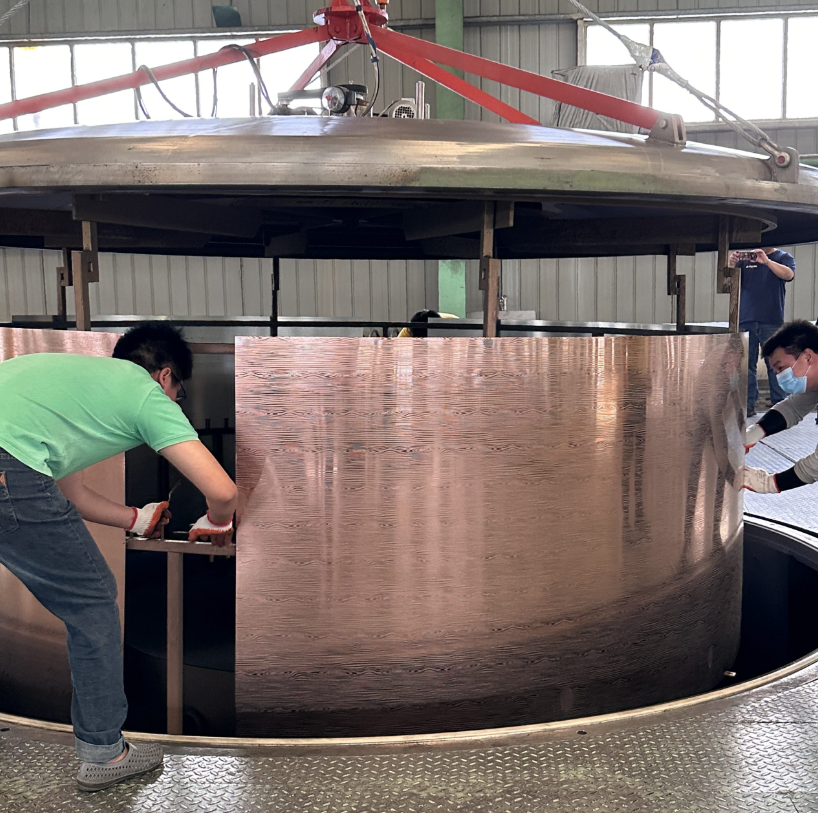
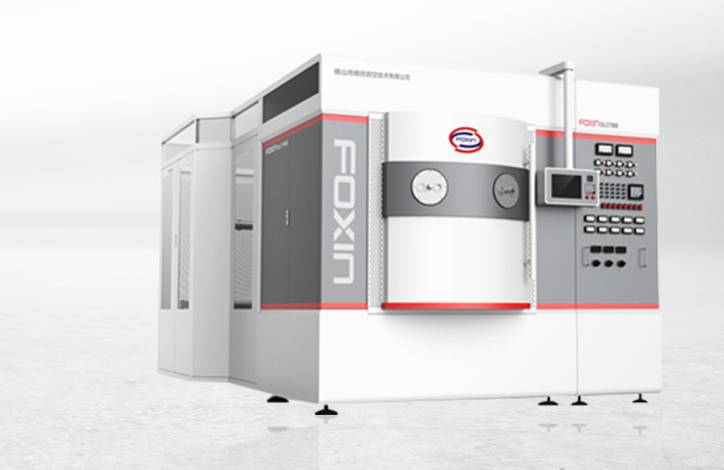
For instance, our High Performance PVD Vacuum Coating Machine is a flagship model designed for versatility. We recently helped a Tier-1 automotive supplier integrate this system to achieve a consistent “Piano Black” finish on interior trim parts, significantly reducing their reject rate compared to traditional spray painting.
Comparing Multi-Arc Ion Plating and Magnetron Sputtering Systems
When selecting a system, it’s important to compare multi-arc ion plating and magnetron sputtering. Multi-arc ion plating uses high-energy electric arcs to vaporize the target material. This method produces very dense coatings with excellent adhesion, making it ideal for industrial tools. Conversely, magnetron sputtering allows for precise control over film thickness. This is why our Watch IPG Ion Plating Machine is the preferred choice for luxury horology brands; it provides the smooth, flawless finish required for high-end watches.
| Feature | Multi-Arc Ion Plating | Magnetron Sputtering |
|---|---|---|
| Process | High-energy arcs vaporize the target. | Plasma bombards the target to sputter atoms. |
| Coating Density | Very high, excellent adhesion. | High, with precise thickness control. |
| Best For | High wear resistance, complex geometries. | Uniform films, smooth decorative finishes. |
| Common Use | Tools, automotive parts, hardware, TiN/CrN coatings. | Watches, electronics, optical components, multilayer and oxide coatings. |
Achieving Matte, Glossy, and Custom Black Surface Finishes
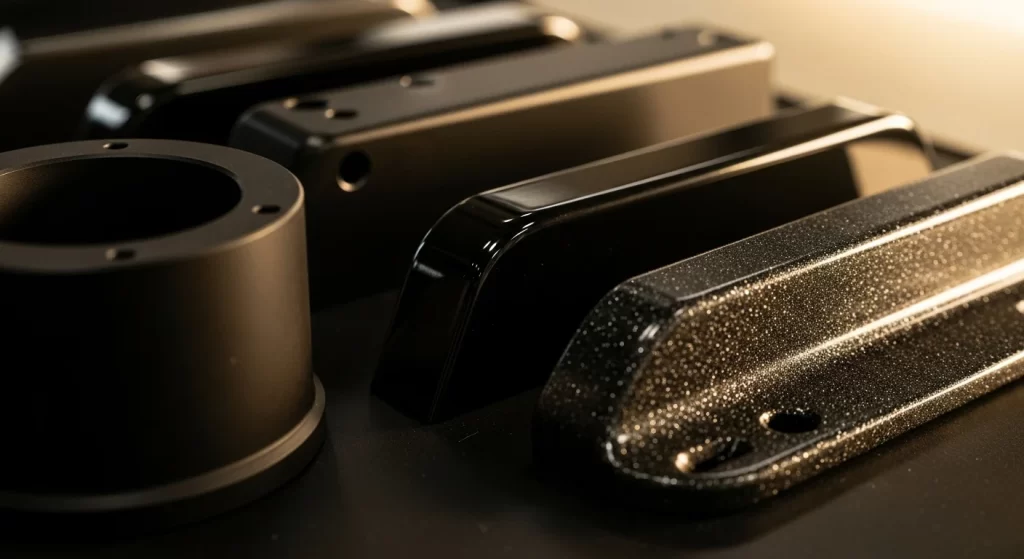
One major benefit of black PVD coating is its versatility. By modifying process parameters and gas ratios (like Nitrogen or Acetylene), we can deliver matte, glossy, or custom black finishes. Our engineering team has successfully developed custom “Graphite” and “Jet Black” recipes for hardware manufacturers, ensuring their products stand out in a crowded market. If you are looking for specific textures, understanding what are PVD coating colors and finishes can help you define your product’s visual identity.
Material Compatibility and Industrial Applications
The black PVD process is compatible with a broad array of materials. While stainless steel, titanium, and aluminum are the most common, our R&D has proven that PVD coating can be used in plastic products with the correct pre-treatment, expanding design possibilities for the electronics industry.
- Jewelry and Watches: Provides a hypoallergenic, uniform black finish.
- Automotive: Used for grilles and engine parts to reduce friction.
- Medical Devices: Biocompatible coatings that minimize glare on surgical tools.
- Tools: Extends lifespan through increased surface hardness.
Conclusion
Black PVD coatings deliver exceptional durability and aesthetic appeal. By mastering Physical Vapor Deposition, manufacturers boost product performance and gain a competitive edge. Foxin’s advanced Multi-Arc Ion Plating and Magnetron Sputtering systems ensure consistent quality for jewelry, automotive parts, and more. Elevate your products—contact our technical team today for a customized quote and discover how our equipment meets your production needs.
FAQ
Is black PVD coating durable?
Black PVD coating and DLC coating are highly durable. The PVD process produces a finish that is harder and more resistant to scratches, corrosion, and wear than traditional coatings. It protects materials like stainless steel and keeps them looking new for longer.
Can black PVD coating achieve different visual effects and shades?
Absolutely. The PVD finish meaning is highly customizable and includes PVD color options. You can achieve various effects, from a non-reflective matte to a high-gloss shine. In addition to deep black coatings, the process can produce a range of dark grays and graphite tones, offering great design flexibility.
What are some common industrial applications for black PVD-coated parts?
Black PVD coating is widely used for durable, decorative finishes on watches, jewelry, and architectural hardware like door handles. It also enhances automotive parts, cutting tools, and biocompatible medical devices.