



What is PVD coating? How does it work?
What Is PVD Coating, in Plain Terms?
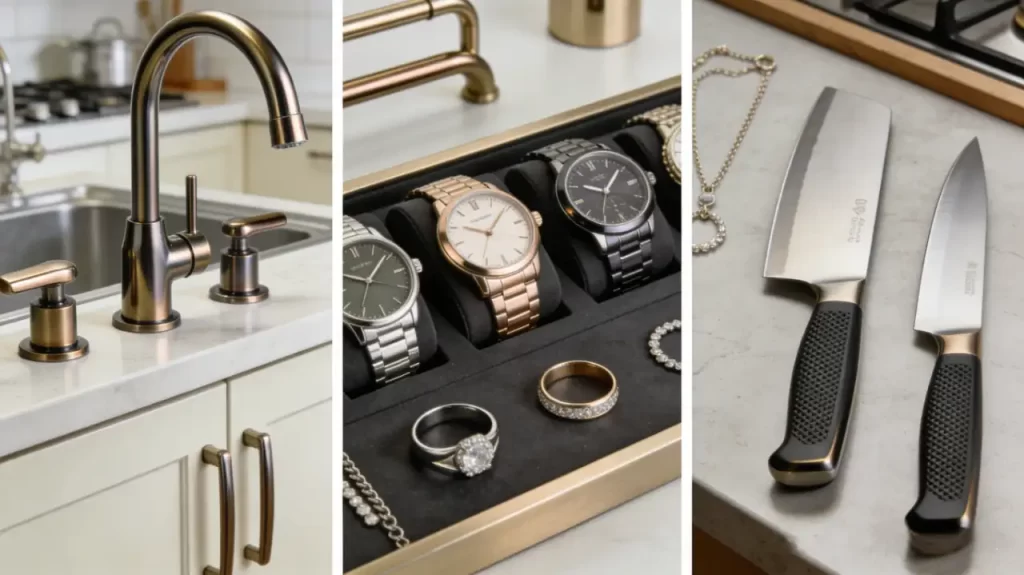
PVD coating is a vacuum process that deposits a thin, hard film of metal or ceramic onto a part, atom by atom. The film bonds to the surface instead of sitting on top of it, so PVD finishes resist scratching, corrosion, and wear far better than paint or wet plating. A typical PVD layer is 0.5 to 5 micrometers thick, about one-hundredth the width of a human hair, yet it can outlast a much thicker electroplated layer.
That short answer is enough for a quick decision. The rest of this guide explains how PVD actually works, which finishes it produces, where it is used, how it compares with electroplating, and what a PVD coating machine costs, so you can judge whether it fits your parts. For a broader view of the same family of processes, see what vacuum coating is.
How Does Physical Vapor Deposition Create a Coating?
Physical Vapor Deposition (PVD) works by turning a solid coating material into a vapor inside a vacuum chamber, then letting that vapor condense onto the part as a thin film. The word physical is the key: the coating is released by heat, ion bombardment, or an electric arc, not by a chemical reaction. The material starts as a solid target and ends as a solid film, with a vapor step in between.
Because no plating bath is involved, PVD does not generate the acid waste, heavy-metal sludge, or cyanide byproducts that electroplating produces. That single fact separates PVD from wet coating methods and drives most of its industrial adoption.
Three physical mechanisms dominate industrial PVD. Each one turns the target into vapor a different way, and each suits different parts:
| Mechanism | How the vapor forms | Typical coatings | Best for |
|---|---|---|---|
| Arc evaporation | An electric arc strikes a metal target, blasting off ions | TiN, TiCN, CrN, gold-tone films | Tools, jewelry, door hardware |
| Sputtering | Ionized gas bombards a target, knocking atoms loose | Cr, Ti, Al, TiO2, optical films | Flat sheets, glass, precision layers |
| Thermal evaporation | The target is heated until it boils off | Al, Ag, Cu, decorative films | Plastics, reflectors, web coating |
Each mechanism trades off differently on film density, throwing power, and cost. Sputtering gives the smoothest, most uniform films; arc evaporation gives the hardest films and bonds best to complex shapes; thermal evaporation is fastest for large flat areas and heat-sensitive substrates. A single production line usually runs one mechanism well rather than mixing all three.
The PVD Process: Principles and Step-by-Step Stages
The PVD process runs in a sealed vacuum chamber at 10⁻¹ to 10⁻⁵ Pa. The working principle is simple to state and demanding to control: create a vacuum clean enough that vaporized coating atoms travel freely to the part, then let them condense into a dense film. Everything else in the process exists to make that transfer even, dense, and repeatable.
The sequence for a typical batch runs through five controlled stages:
- Loading and fixturing. Parts are mounted so every surface that needs coating faces the targets. Fixture design decides whether the coat is even or patchy, and it is often the hardest part of a job to engineer.
- Pumping down. A rotary-vane pump pulls rough vacuum, then roots and diffusion pumps (or a turbomolecular pump on smaller systems) reach process pressure.
- Cleaning and pre-heat. Residual moisture and hydrocarbons on the part are baked off. Most cycles add a glow-discharge etch to activate the surface so the film bonds at the atomic level.
- Deposition. Arc, sputtering, or evaporation releases coating atoms, which cross the chamber and condense on the part, building the film layer by layer.
- Cooling and venting. The chamber returns to atmospheric pressure and parts are unloaded.
Two settings decide most of the outcome: chamber pressure and deposition time. Pressure controls how much residual gas dilutes the metal vapor and therefore how dense the film becomes; time controls thickness. An operator tunes both against a coupon sample before the production run, then holds them fixed for the batch.
The physics of the vacuum stage matter as much as the coating stage. Below 10⁻¹ Pa, the mean free path of the vapor atoms becomes long enough that they reach the part without colliding with residual gas. That is why pump-down quality, chamber sealing, and outgassing control directly set film adhesion and density.
PVD Professional Equipment Types
The equipment that carries out PVD is a PVD coating machine: a vacuum chamber, a pump stack, a power supply, and a control system sized to the parts and the throughput you need. Frame size matters as much as coating mechanism. A machine built for eyeglass frames cannot coat a 2,500 × 3,000 mm stainless steel sheet, and a wide sheet line is wasteful on small jewelry. Choosing the wrong platform is the single most expensive mistake in PVD investment, so the table below maps each platform to the parts it is built for.
We build five PVD platform families. Each covers a defined range of part geometry, coating mechanism, and batch volume:
| Series | Technology | Chamber / format | Typical parts | Coating focus | Product family |
|---|---|---|---|---|---|
| Multi-Arc | Cathodic arc evaporation | Batch, multi-target | Door handles, sinks, hardware, jewelry | Hard decorative films, gold tones | multi-arc ion plating |
| IP Magnetron | Magnetron sputtering | Batch, fine-film control | Watches, chains, small precision parts | Smooth fine films, precious-metal look | magnetron sputtering platform |
| GD Large | Multi-arc, large format | Large batch | Appliance and auto trim, large metal parts | Heavy-duty large-part coating | GD large multi-arc series |
| TG | Multi-arc with sheet handling | Inline / sheet | Stainless steel sheet, architectural panels | Continuous sheet and coil | TG sheet coating line |
| ZJ Large Diameter | Multi-arc for tubes | Long-axis | Long tubes, large-diameter cylinders | Tube and cylinder coating | ZJ large diameter line |
A machine is only half the decision. The other half is matching the platform to the exact part, which is why the same series breaks into task-specific machines:
| Machine type | Built for | Series |
|---|---|---|
| gold PVD coating equipment | Gold-tone jewelry and small components | IP Magnetron |
| jewelry plating machine | Rings, pendants, findings | IP Magnetron |
| watch IPG ion plating machine | Watch cases and bands | IP Magnetron |
| kitchen sink PVD coating machine | Stainless steel sinks | Multi-Arc |
| titanium door handle machine | Door handles and hardware | Multi-Arc |
| gold chain plating machine | Jewelry chains, high volume | Multi-Arc |
| stainless steel sheet PVD machine | Sheet and panel stock | GD Large |
| large hardware coating machine | Oversized metal parts | GD Large |
| ceramic tiles coating machine | Ceramic tiles and flat stock | TG |
| glasses frame coating equipment | Eyewear frames and small frames | Multi-Arc |
Every platform shares the same non-negotiable core: main sealing surfaces machined to Ra1.6 μm, secondary seals to Ra3.2 μm, welds built to pressure-vessel practice with no gas porosity, and every internal vacuum surface polished to cut outgassing. Leaks are found with an imported helium mass spectrometer rather than guessed at. You can review the full equipment range on the coating machines overview, and compare every series side by side in the product catalog.
We also run our own titanium finishing plant, so a coating recipe can be proven on real sample parts before it goes into a machine spec. That is the difference between a catalog number and a process that actually works on your part.
What Coatings and Colors Can PVD Produce?
PVD can make decorative finishes and functional hard films from the same platform. The color comes from the coating compound, not from dye — so it will not wash off or rub away.
| Coating | Color | Hardness (HV) | Common use |
|---|---|---|---|
| TiN | Gold | ~2,400 | Cutting tools, gold-tone hardware |
| TiCN | Gray-violet | ~3,000 | Wear parts, cutting edges |
| CrN | Silver-gray | ~2,000 | Corrosion resistance, molds |
| TiAlN | Dark gray | ~3,300 | High-heat tools |
| ZrN | Light gold | ~2,500 | Sanitary ware, door hardware |
| CrC | Dark gray | ~2,700 | Decorative wear layers |
| DLC | Black | ~3,000+ | Low-friction, high-wear surfaces |
| TiO2 | Iridescent | varies | Optical, decorative |
More than 9 finish families are in routine production, and the palette runs wider than gold — PVD coating colors cover black, champagne, rose gold, gunmetal, and mirror-chrome looks. Black finishes come from carbon-based films such as DLC or CrC; the classic gold comes from TiN or ZrN.
Key Benefits of PVD Coating
The reason PVD has displaced older finishing methods across so many industries comes down to a set of benefits that hold up in real production, not just on a spec sheet. Each one below is measurable, and each explains why a part that used to be plated is now coated in vacuum.
- Extreme hardness. PVD films run from about 2,000 to 3,000+ HV, several times harder than chrome plating (150–600 HV). A coated handle, tool edge, or watch case keeps its surface through years of handling that would scratch a plated finish.
- High wear resistance. Because hardness comes with a dense, well-bonded film, PVD resists abrasion, scuffing, and rubbing at hand-contact and sliding points. Films such as DLC push friction lower still, which is why they show up on cutting tools and precision parts.
- Strong corrosion resistance. PVD films are validated against salt spray, thermal shock, alcohol, and artificial sweat, so they survive coastal air, cleaning chemicals, and constant skin contact without corroding.
- A wide, dye-free color range. The color comes from the coating compound itself, not from pigment, so gold, rose gold, black, champagne, gunmetal, and mirror-chrome looks do not fade under UV or repeated cleaning. More than nine finish families are in routine production.
- Bonding at the atomic level. PVD does not simply sit on the surface; the film grows onto it atom by atom after a glow-discharge etch. That atomic bond is why the coating resists flaking and peeling far better than paint or a poor plating job.
- No plating bath, no toxic waste. Because the process runs dry in a sealed vacuum, there is no acid bath to treat, no heavy-metal sludge, and no cyanide byproduct. That lowers waste-disposal cost and regulatory exposure at the same time.
- Low process temperature. Many PVD cycles run well below the temperature that would soften or warp a finished part, so thin metal, heat-treated components, and even some plastics can be coated without distortion.
- Food-contact and skin-safe finishes. PVD films are used on cutlery, kitchenware, and jewelry, and leave no chemical residue on the part, which is why they pass everyday-use safety expectations.
- Consistent, repeatable quality. Once pressure, time, and fixture are locked, a vacuum cycle reproduces the same film batch after batch, which matters when a customer returns to reorder an exact finish.
For tools where low friction matters as much as hardness, a diamond-like carbon coating pushes wear resistance and sliding performance higher still. Taken together, these benefits are why PVD is the default choice for parts that must look good and last in daily contact.
PVD Coating vs Electroplating: A Professional Comparison
PVD coating and electroplating both put a metal finish on a part, but they are different technologies with different physics, and the choice between them is an engineering decision rather than a matter of preference. Electroplating deposits metal from a liquid electrolyte driven by electric current; PVD builds a film from a vapor in a vacuum. That single difference cascades into bonding strength, achievable hardness, tolerable film thickness, environmental load, and total cost.
On bonding, electroplating relies on surface preparation and the electrolyte’s own adhesion, which can leave a plated layer prone to blistering or peeling when preparation is imperfect. PVD forms an atomic-level bond after a glow-discharge etch, so the film becomes part of the surface rather than a skin on top of it. On hardness, the gap is large: PVD films reach 2,000–3,000+ HV against 150–600 HV for typical decorative plating, which is why PVD is specified wherever a finish must survive abrasion. On thickness, electroplating can build a thick deposit (5–50 µm) that can even restore worn dimensions, while PVD is deliberately thin (0.5–5 µm) and is chosen for surface performance rather than build-up.
| Dimension | PVD coating | Electroplating |
|---|---|---|
| Mechanism | Physical vapor condenses on the part in vacuum | Electric current deposits metal from a liquid bath |
| Bonding | Atomic-level bond after glow-discharge etch | Adhesion depends on preparation; blistering risk |
| Film thickness | 0.5–5 µm (surface performance) | 5–50 µm (can build up or restore) |
| Hardness | 2,000–3,000+ HV | 150–600 HV |
| Corrosion / wear | Salt spray, thermal shock, sweat tested; high wear resistance | Varies with bath; lower wear resistance |
| Color options | Dye-free gold, rose gold, black, gunmetal, chrome looks | Limited, mainly metal tones |
| Environmental load | No plating bath; minimal waste | Acid baths, heavy-metal sludge, cyanide |
| Process temperature | Low; suits heat-sensitive parts | Bath temperature and chemistry constrain parts |
| Cost profile | Higher tooling, lower waste and rework | Lower tooling, higher waste-treatment cost |
Choose PVD when the surface has to stay hard and good-looking through heavy use, when color must not fade, and when waste treatment is a cost you want to remove. Choose electroplating when you need a thick, low-cost deposit, when you must rebuild a worn dimension, or when the part cannot tolerate a vacuum cycle. For decorative and wear-facing work on metal, PVD usually wins on total cost of ownership once rework and waste treatment are counted. For anyone replacing a chrome line, we cover the switch in detail in our chrome plating alternative guide, and a direct application comparison sits in PVD vs electroplated tapware.
Where Is PVD Coating Used in Real Production?
PVD shows up wherever a surface has to look good and last. High-volume uses include:
- Jewelry and watches: chains, cases, bands, and findings that need a durable gold or rose-gold tone.
- Kitchenware and sanitary ware: sinks, faucets, and taps that face constant water and cleaning.
- Door hardware and lock accessories: handles and locks that wear at hand-contact points.
- Architectural metal: how PVD coating performs on stainless steel sheets and panels for facades and interior trim.
- Tools and precision parts: drills, molds, and wear surfaces that need a hard, low-friction skin.
- Automotive and lighting: trim, reflectors, and wheels that must hold a finish outdoors.
The common thread is a part that a customer touches or sees every day, where a faded or scratched finish means a return. If your product sits in one of these groups, the PVD coating applications page maps the process to each sector in more depth.
How Much Does PVD Coating Cost?
There is no single price, because cost tracks the part, not the process. Four drivers set the number:
- Coating material. A plain TiN cycle costs less than a multi-layer or precious-metal finish.
- Batch loading density. More parts per cycle spreads the fixed pump-down cost across more units.
- Fixture complexity. Custom fixtures add one-time engineering but raise yield.
- Cycle time. Thicker or multi-layer films take longer and cut throughput.
The practical figure is cost per part, and it drops fast once a line is loaded well. For a full breakdown of machine pricing and the equipment side, see the PVD coating machine price guide, which walks through what drives the capital cost.
How Do You Judge PVD Coating Quality?
Quality shows up on a coupon, not in a brochure. We check coated samples against a fixed set of tests:
- Salt spray for corrosion hours
- Thermal shock for adhesion under temperature swings
- Alcohol and artificial sweat for chemical resistance
- RCA abrasion and cross-hatch for wear and adhesion
- Bend and angle tests for ductility on formed parts
Sealing surfaces are machined to Ra1.6 μm on main seals and Ra3.2 μm on secondary seals, welds follow pressure-vessel practice with no gas porosity, and every internal vacuum surface is polished to lower outgassing. Leaks are located with an imported helium mass spectrometer, which finds the smallest faults rather than guessing at them.
One technique worth knowing is the static pressure-rise test, which tells you what kind of vacuum fault you have before you open the chamber. A straight-line rise points to pump capacity, a curved rise to outgassing, a sloped rise to a real leak, and a broken line to a combination. Reading the curve saves hours of blind searching, and it is a diagnostic most suppliers do not explain.
Does PVD Coating Have Any Limits?
PVD is not the right answer for every part, and an honest supplier will say so. Three limits come up most often:
- It is a line-of-sight process. The coating travels in a straight path from target to part, so deep holes and blind recesses can come out thin or bare unless the part is rotated on a fixture.
- Substrate choice matters. PVD bonds best to metals such as stainless steel, brass, and aluminum. Many plastics need a special low-temperature cycle or a base layer first.
- It is thin by design. A PVD film adds hardness and look, but it will not rebuild worn dimensions the way a thick plated layer can.
None of these are deal-breakers once you know them. They are fixture and cycle decisions, and they are exactly the points worth settling before a machine is specified.
How PVD Fits With Other Vacuum Processes
If you want the physics behind the vacuum side of PVD, the vacuum technology behind it explains pressure, pumping, and the measurement units used here. For the two high-volume variants of the process itself, see magnetron sputtering and thermal evaporation coating. Together they form one connected family of surface treatments rather than separate techniques.
Send Us a Sample Part
The fastest way to know whether PVD fits your product is to coat one. We run our own titanium finishing plant, so we can prove a recipe on your actual part, checking finish, color, and wear result before any machine is specified. Start with a sample test or walk through the factory to see the process on a live line. Learn more about us.
FAQ
What is PVD coating and how does it work? PVD coating is a vacuum process that turns a solid coating material into a vapor and lets it condense onto a part as a thin, hard film. It works by releasing the coating with heat, ion bombardment, or an electric arc inside a sealed chamber, so no plating bath or chemical reaction is involved.
What is PVD coating used for? PVD coating is used to give parts a hard, durable, decorative surface. Common uses include jewelry and watches, kitchen and bathroom fixtures, door hardware, architectural stainless steel, cutting tools, and automotive trim.
Is PVD coating better than electroplating? For hardness, wear, and environmental footprint, PVD is the stronger choice. Electroplating can still win when you need a thick, low-cost deposit and surface appearance is secondary. The right pick depends on the part and its use.
How long does PVD coating last? A properly applied PVD film typically lasts years of daily handling. It resists scratching, corrosion, and fading far longer than paint or thin wet plating, and it does not peel the way a poor plating job can.
Does PVD coating fade or wear off? Decorative PVD color comes from the coating compound, not dye, so it does not fade under UV or cleaning. Wear only appears under extreme abrasion, and even then the film wears gradually instead of flaking.
Is PVD coating safe for everyday use? Yes. PVD films are used on food-contact and worn items such as cutlery and jewelry. The process runs in a sealed vacuum with no plating bath, so there is no chemical residue left on the finished part.
What is PVD coating made of? PVD coatings are made of metals and ceramics applied as a vapor — titanium nitride, chromium nitride, zirconium nitride, titanium aluminum nitride, diamond-like carbon, and metal oxides such as TiO2.